
โซนที่ 11 ลานธรรมปฏิบัติ
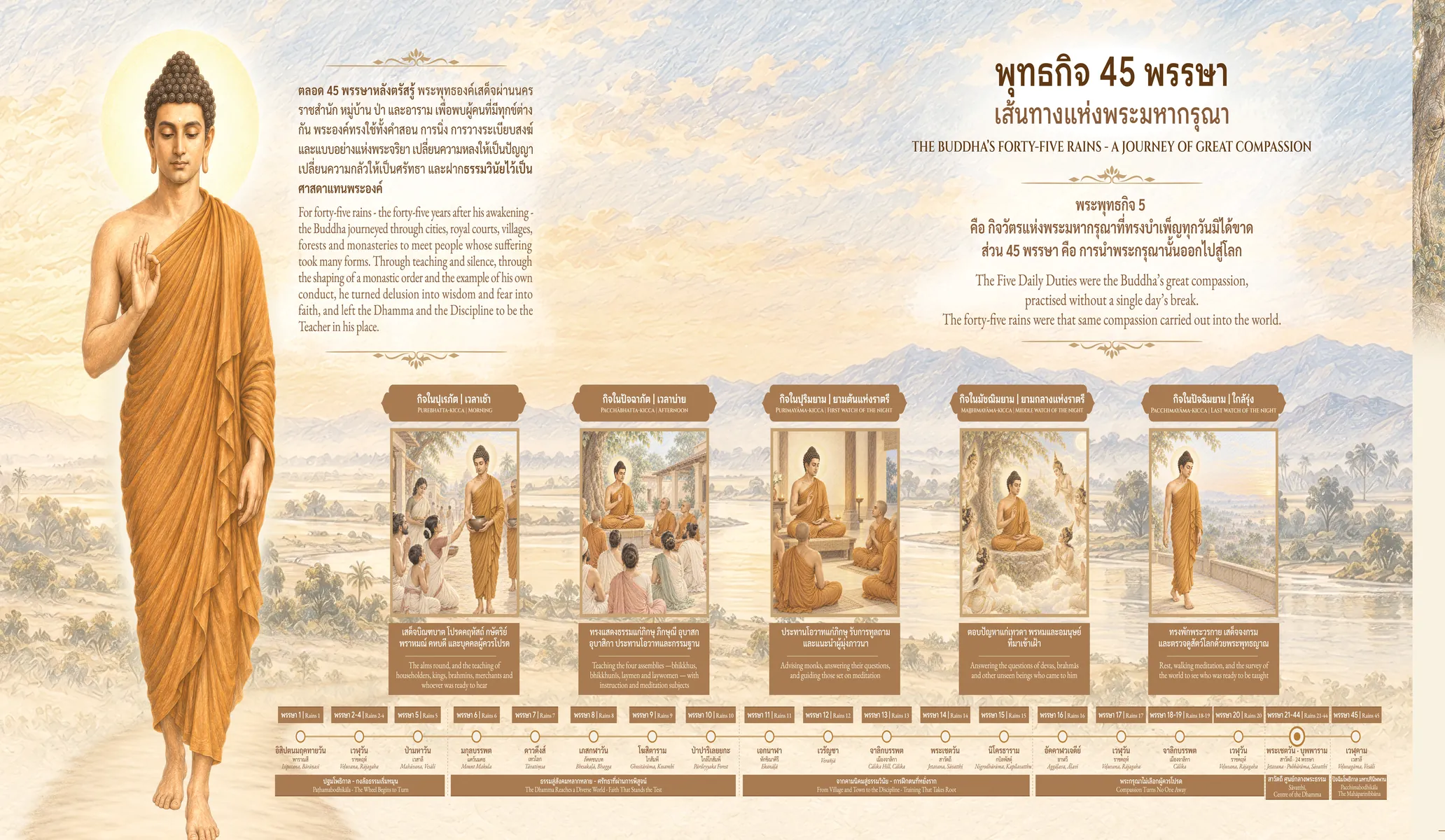
พุทธกิจ 45 พรรษา — เส้นทางแห่งพระมหากรุณา
The Buddha’s Forty-Five Rains · A Journey of Great Compassion
ตลอด 45 พรรษาหลังตรัสรู้ พระพุทธองค์เสด็จผ่านนคร ราชสำนัก หมู่บ้าน ป่า และอาราม เพื่อพบผู้คนที่มีทุกข์ต่างกัน พระองค์ทรงใช้ทั้งคำสอน การนิ่ง การวางระเบียบสงฆ์ และแบบอย่างแห่งพระจริยา เปลี่ยนความหลงให้เป็นปัญญา เปลี่ยนความกลัวให้เป็นศรัทธา และฝากธรรมวินัยไว้เป็นศาสดาแทนพระองค์
For forty-five rains - the forty-five years after his awakening - the Buddha journeyed through cities, royal courts, villages, forests and monasteries to meet people whose suffering took many forms. Through teaching and silence, through the shaping of a monastic order and the example of his own conduct, he turned delusion into wisdom and fear into faith, and left the Dhamma and the Discipline to be the Teacher in his place.
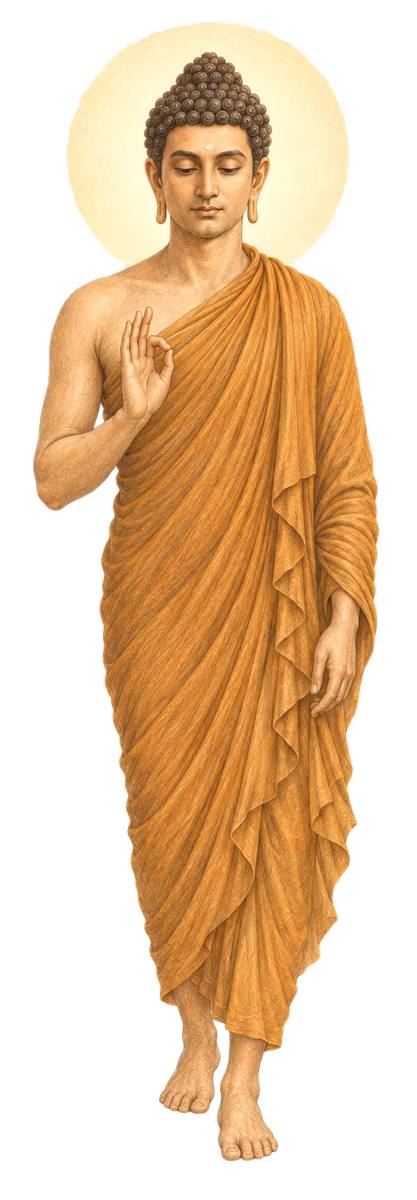
45 พรรษา คือ 45 ปี นับจากราตรีตรัสรู้ใต้ต้นโพธิ์ จนถึงคืนเพ็ญสุดท้ายใต้ต้นสาละคู่ ไม่มีวันใดเลย ที่พระพุทธองค์ทรงหยุดพัก
เส้นทางนั้นผ่านนคร ราชสำนัก หมู่บ้าน ป่า และอาราม เพื่อพบผู้คนที่มีทุกข์ต่างกัน นี่คือเรื่องราวของการเดินทางนั้น
ก่อนพรรษาแรก คืนเพ็ญเดือนวิสาขะ ริมฝั่งเนรัญชรา พระมหาบุรุษตรัสรู้เป็นพระสัมมาสัมพุทธเจ้า ทรงเสวยวิมุตติสุข 7 สัปดาห์ พ่อค้า 2 พี่น้อง ตปุสสะและภัลลิกะ ถวายข้าวสัตตุก้อนสัตตุผง ขอถึงพระพุทธและพระธรรมเป็นที่พึ่ง อุบาสกคู่แรก ผู้มีสรณะเพียง 2 เพราะยังไม่มีพระสงฆ์
ทรงพิจารณาว่า ธรรมนี้ลุ่มลึก ยากที่สัตว์โลกจะเข้าใจ เมื่อสหัมบดีพรหมอาราธนา ทรงเห็นหมู่สัตว์ดังดอกบัว 4 เหล่า อุคฆฏิตัญญู รู้ได้ฉับพลัน วิปจิตัญญู รู้เมื่อขยายความ เนยยะ พอแนะนำได้ ปทปรมะ ยังสอนไม่ได้ จึงทรงตั้งพระทัย ประกาศธรรม จนกว่าพระศาสนาจะตั้งมั่น
นับแต่นั้น ทุกวันตลอด 45 ปี มีระเบียบเดียวกัน ที่เรียกว่า พุทธกิจ 5 เช้า บิณฑบาต บ่าย แสดงธรรมแก่พุทธบริษัท ยามต้น ประทานโอวาทแก่ภิกษุ ยามกลาง ตอบปัญหาเทวดา ใกล้รุ่ง เสด็จจงกรม แล้วตรวจดูสัตว์โลก ว่าผู้ใดพร้อมจะฟังธรรม
จึงเสด็จดำเนินด้วยพระบาท ไปหาปัญจวัคคีย์ที่ป่าอิสิปตนะ ผนังตรงหน้าท่านแบ่งเส้นทางนี้เป็น 6 ช่วง ตาม 19 สถานีที่ทรงจำพรรษา เราจะเดินไปทีละช่วง
Forty-five rains. Forty-five years. From the night of awakening beneath the Bodhi tree to the last full moon beneath the twin sāla trees, the Buddha never once stopped.
The road passed through cities and royal courts, villages, forests and monasteries, to meet people whose suffering took many forms. This is the story of that journey.
Before the first rains, on the full moon of Visākha beside the Nerañjarā, he awakened as the Buddha. For seven weeks he dwelt in the bliss of release. Two merchant brothers, Tapussa and Bhallika, offered him barley cakes and took refuge in the Buddha and the Dhamma — the first lay followers, with only two refuges, for as yet there was no Saṅgha.
He reflected that this Dhamma was deep, hard for the world to grasp. When Brahmā Sahampati pleaded, he saw beings as four kinds of lotus: those who understand at once; those who understand when it is explained; those who can be led by training; and those who cannot yet be taught. So he resolved to teach until the Dhamma stood firm.
From then on every day for forty-five years kept the same shape — the Five Daily Duties. Morning: the alms round. Afternoon: teaching the four assemblies. First watch: advising the monks. Middle watch: answering devas. Last watch: walking meditation, and surveying the world to see who was ready to hear the Dhamma.
So he set out on foot to the five ascetics in the deer park at Isipatana. The wall before you divides this road into six periods, following the nineteen places where he spent the rains. We will walk them one by one.
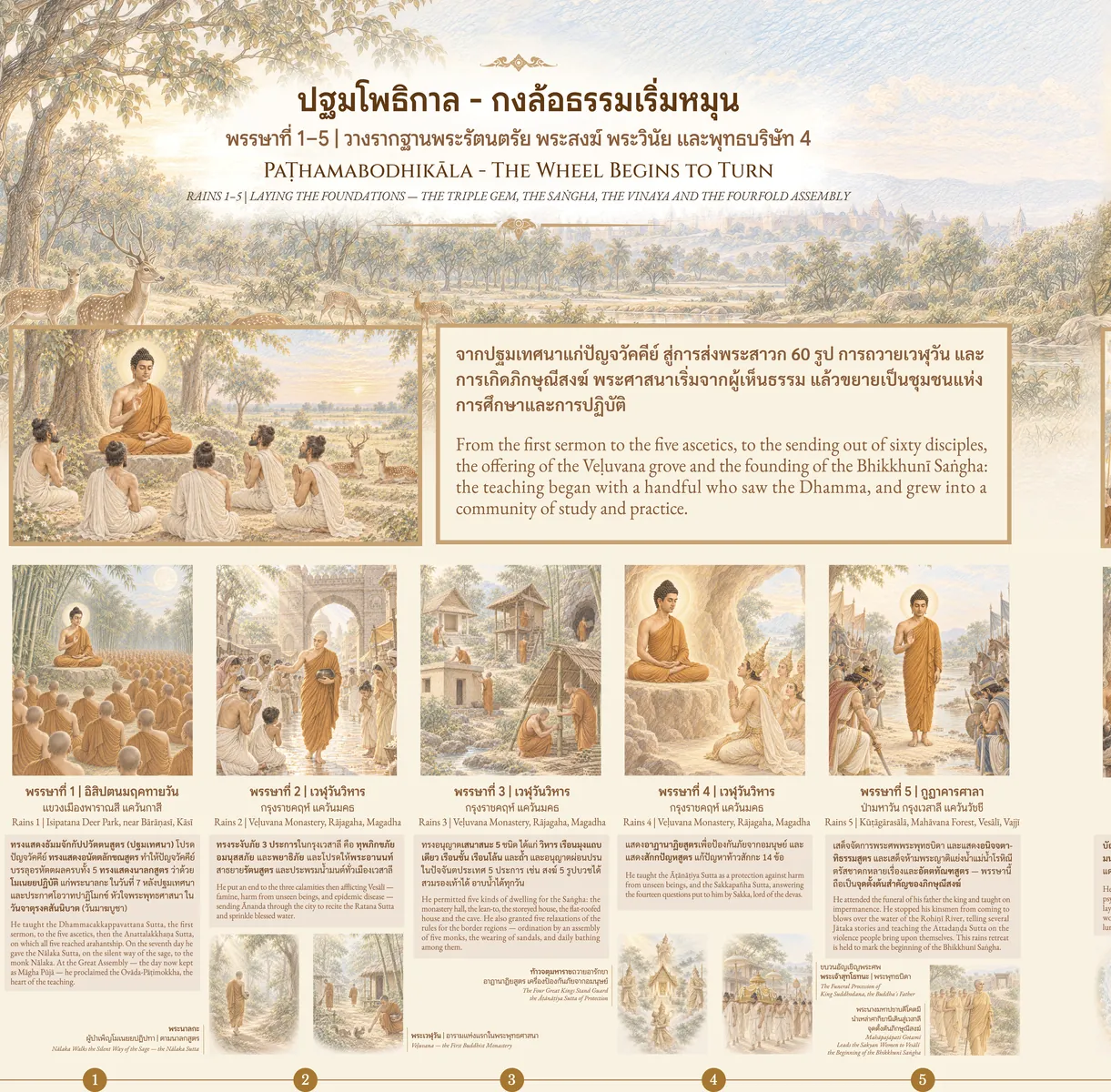
วันเพ็ญเดือนอาสาฬหะ ป่าอิสิปตนมฤคทายวัน ทรงแสดงธัมมจักกัปปวัตตนสูตร แก่ปัญจวัคคีย์ ทางสายกลาง และอริยสัจ 4 เมื่อโกณฑัญญะได้ดวงตาเห็นธรรม และทูลขอบวช พระรัตนตรัยจึงครบองค์ 3 เป็นครั้งแรก 5 วันต่อมา ทรงแสดงอนัตตลักขณสูตร ทั้ง 5 บรรลุอรหัตตผล
วันที่ 7 หลังปฐมเทศนา นักบวชผู้หนึ่งออกจากป่ามาเข้าเฝ้า ท่านชื่อ นาลกะ หลานของอสิตดาบส ผู้ทำนายเมื่อเจ้าชายประสูติ ว่าจะตรัสรู้เป็นพระพุทธเจ้า ดาบสให้หลานบวชรอ นาลกะรอมา 35 ปี ทรงแสดงนาลกสูตร โมเนยยปฏิบัติ ข้อปฏิบัติของมุนี ท่านทูลถามเพียงครั้งเดียว แล้วเข้าป่าปฏิบัติจนถึงที่สุด ปรินิพพานในอิริยาบถยืน พิงภูเขาหิงคุลิกะ
ต่อมา ยสกุลบุตรออกบวชพร้อมสหาย 54 คน เมื่อมีพระอรหันต์ 60 รูป ทรงส่งออกไปคนละทาง เพื่อประโยชน์แก่ชนหมู่มาก ที่อุรุเวลา โปรดชฎิล 3 พี่น้อง พร้อมบริวาร 1,000 ที่คยาสีสะ ทรงแสดงอาทิตตปริยายสูตร สิ่งทั้งปวงกำลังลุกไหม้ ด้วยไฟคือราคะ โทสะ โมหะ
ที่ราชคฤห์ พระเจ้าพิมพิสารถวายเวฬุวัน อารามแห่งแรก ยามค่ำ เปรตผู้เคยเป็นพระญาติ ส่งเสียงร้องขอส่วนบุญ พระราชาจึงถวายทานอุทิศแด่ผู้ล่วงลับ ทรงอนุโมทนาด้วยติโรกุฑฑสูตร อันเป็นที่มาของการกรวดน้ำ ที่นี่ พระสารีบุตรและพระมหาโมคคัลลานะเข้ามาบวช วันเพ็ญเดือนมาฆะ พระอรหันต์ 1,250 รูป มาประชุมโดยมิได้นัดหมาย ทรงแสดงโอวาทปาฏิโมกข์ ไม่ทำบาปทั้งปวง ทำกุศลให้ถึงพร้อม ชำระจิตของตนให้ผ่องแผ้ว
พรรษาที่ 2 เวฬุวัน ปีนี้เสด็จกลับกบิลพัสดุ์ครั้งแรก ราหุลกุมารวัย 7 ขวบเดินตามทูลขอมรดก ทรงประทานมรดกอันประเสริฐ คือการบรรพชา และทรงบัญญัติว่า ผู้จะบวชต้องได้รับอนุญาตจากบิดามารดา ปีเดียวกัน เวสาลีเผชิญภัย 3 ประการ ทรงให้พระอานนท์สาธยายรัตนสูตร ประพรมน้ำมนต์ทั่วเมือง
พรรษาที่ 3 และ 4 ยังประทับที่เวฬุวัน ทรงวางระเบียบเสนาสนะ เภสัช และวิธีอุปสมบทที่ให้สงฆ์เป็นใหญ่ ทรงแสดงอาฏานาฏิยสูตร เครื่องป้องกันภัยจากอมนุษย์ และที่ถ้ำอินทสาละ ทรงแสดงสักกปัญหสูตร ท้าวสักกะทูลถามว่า เหตุใดสัตว์ทั้งหลาย ปรารถนาจะอยู่โดยไม่มีเวร แต่กลับจองเวรกัน ตรัสว่า เพราะริษยาและความตระหนี่ผูกไว้ แล้วทรงสาวเหตุลึกลงไปจนถึงตัณหา ท้าวสักกะบรรลุโสดาบัน
พรรษาที่ 5 พระเจ้าสุทโธทนะ พระพุทธบิดา ประชวรหนัก เสด็จไปแสดงธรรมจนบรรลุอรหัตตผล แล้วทรงจัดการพระศพ ไม่นาน พระญาติ 2 ฝั่งแม่น้ำโรหิณี เตรียมรบกันเพราะแย่งน้ำ เสด็จไปประทับกลาง 2 กองทัพ ตรัสถามว่า น้ำกับชีวิตกษัตริย์ สิ่งใดมีค่ากว่ากัน ทรงห้ามศึกด้วยชาดกและอัตตทัณฑสูตร
ปีเดียวกัน พระนางมหาปชาบดีโคตมี พระน้านางผู้เลี้ยงดูพระองค์ ทูลขอบวช แต่ไม่ทรงอนุญาต พระนางจึงปลงพระเกศา นำเหล่าศากิยานีเดินเท้าสู่เวสาลี พระบาทแตก ยืนร้องไห้ที่ซุ้มประตู ด้วยการทูลขอของพระอานนท์ ทรงอนุญาตโดยมีครุธรรม 8 ประการ ภิกษุณีสงฆ์กำเนิดขึ้น พุทธบริษัท 4 ครบบริบูรณ์
On the full moon of Āsāḷha, in the deer park at Isipatana, he taught the Dhammacakkappavattana Sutta to the five ascetics — the middle way and the four noble truths. When Koṇḍañña saw the Dhamma and asked to be ordained, the Triple Gem was complete for the first time. Five days later, with the Anattalakkhaṇa Sutta, all five reached arahantship.
On the seventh day after the first sermon an ascetic came out of the forest to see him: Nālaka, nephew of the sage Asita, who at the prince’s birth had foretold that he would become a Buddha; the sage had his nephew ordained to wait. Nālaka waited thirty-five years; the Buddha taught him the Nālaka Sutta — the practice of silence, the way of the sage. He asked only once, went into the forest and practised to the very end, passing away standing, leaning against Mount Hiṅgulika.
Then Yasa went forth with fifty-four friends. When there were sixty arahants, he sent them out, each on a different road, for the welfare of the many. At Uruvelā he won over the three Kassapa brothers with their thousand followers. At Gayāsīsa he taught the Fire Sermon: all is burning, with the fires of greed, hatred and delusion.
At Rājagaha King Bimbisāra offered Veḷuvana, the first monastery. At night, ghosts who had once been his kinsmen cried out for a share of merit; the king gave alms dedicated to the departed, and the Buddha gave thanks with the Tirokuḍḍa Sutta — the origin of the custom of pouring water to share merit. Here Sāriputta and Mahāmoggallāna came to be ordained. On the full moon of Māgha, 1,250 arahants gathered without being summoned, and he proclaimed the Ovāda-Pāṭimokkha: do no evil, cultivate the good, purify your own mind.
The second rains, at Veḷuvana. That year he returned to Kapilavatthu for the first time. The boy Rāhula, aged seven, followed him asking for his inheritance, and was given the noblest inheritance — the going forth. He laid down that no one may be ordained without their parents’ consent. The same year Vesālī faced three calamities; he sent Ānanda through the city reciting the Ratana Sutta and sprinkling blessed water.
The third and fourth rains, again at Veḷuvana: rules for dwellings and medicines, and ordination conferred by the Saṅgha. He taught the Āṭānāṭiya Sutta, the protection against unseen beings. At the Indasāla Cave he taught the Sakkapañha Sutta: Sakka asked why beings who wish to live without enmity still live in enmity. Because envy and stinginess bind them, he answered, and traced the cause down to craving itself. Sakka became a stream-enterer.
The fifth rains. King Suddhodana, the Buddha’s father, fell gravely ill; the Buddha went and taught him until he reached arahantship, then attended to the funeral. Soon after, his kinsmen on both banks of the Rohiṇī prepared for war over its water. He sat down between the two armies and asked: which is worth more, water or the lives of warriors? He stopped the war with Jātaka tales and the Attadaṇḍa Sutta.
That same year Mahāpajāpatī Gotamī, the aunt who had raised him, asked to be ordained and was refused. She shaved her head and led the Sakyan women on foot to Vesālī, her feet blistered, weeping at the gate. At Ānanda’s plea he consented, with eight weighty rules. The Bhikkhunī Saṅgha was born; the fourfold assembly was complete.
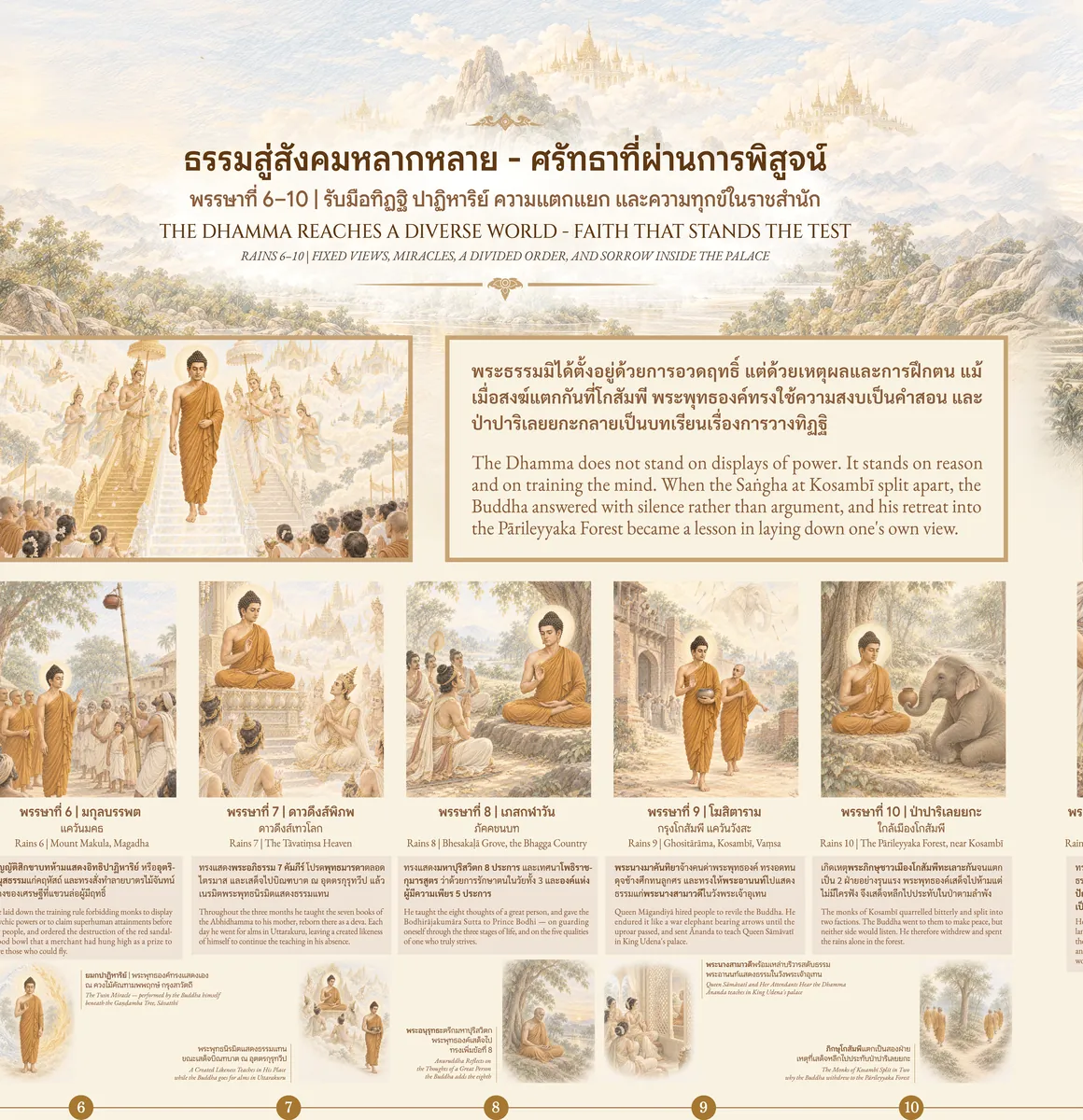
พรรษาที่ 6 มกุลบรรพต ก่อนนั้น เศรษฐีผู้หนึ่งแขวนบาตรไม้จันทน์แดงบนยอดเสา ท้าว่าผู้ใดเหาะขึ้นไปเอาได้ คือพระอรหันต์ เมื่อมีภิกษุเหาะขึ้นไปนำลงมา ทรงตำหนิ สั่งทำลายบาตร และห้ามภิกษุแสดงฤทธิ์แก่คฤหัสถ์ แต่เมื่อเดียรถีย์ท้าทาย ทรงแสดงยมกปาฏิหาริย์ด้วยพระองค์เอง ณ สาวัตถี ปาฏิหาริย์ที่ไม่มีสาวกผู้ใดทำได้
พรรษาที่ 7 เสด็จสู่ดาวดึงส์ ทรงแสดง พระอภิธรรม 7 คัมภีร์โปรดพุทธมารดาตลอด 3 เดือน ทุกวันเสด็จบิณฑบาตที่อุตตรกุรุ และเนรมิตพระพุทธนิรมิตแสดงธรรมแทน วันออกพรรษา เสด็จลงทางบันไดแก้ว ณ สังกัสสะ ท่ามกลางเทวดาและมหาชนที่รอคอย วันเทโวโรหณะ ต้นทางของประเพณีตักบาตรเทโว
พรรษาที่ 8 แคว้นภัคคะ โพธิราชกุมารปูผ้าขาวตั้งแต่บันไดถึงที่ประทับ อธิษฐานว่า หากตนจะได้โอรส ขอให้ทรงเหยียบ ทรงประทับยืนนิ่ง ไม่เหยียบ แล้วทรงแสดงว่า ความสำเร็จมาจากองค์แห่งความเพียร 5 ประการ คือ ศรัทธา สุขภาพดี ซื่อตรงไม่โอ้อวด เพียรละความชั่ว และปัญญา ในป่าแคว้นนี้ ทรงเพิ่มมหาปุริสวิตกข้อที่ 8 แก่พระอนุรุทธะ ธรรมนี้สำหรับผู้ไม่เนิ่นช้า
พรรษาที่ 9 โกสัมพี พระนางมาคันทิยา มเหสีพระเจ้าอุเทน ผูกใจเจ็บแต่ครั้งถูกปฏิเสธ จ้างคนด่าทอพระพุทธองค์ทั่วเมือง พระอานนท์ทูลขอให้เสด็จหนี ตรัสว่า เราจักอดทน ดุจช้างศึกทนลูกศร เสียงด่าสงบลงใน 7 วัน
ในวังเดียวกัน มีมเหสีอีกพระองค์ พระนางสามาวดี เด็กกำพร้าที่โฆสกเศรษฐีรับเป็นธิดา นางขุชชุตตรา ข้าหลวงหลังค่อม ได้ฟังธรรมจนได้ดวงตาเห็นธรรม แล้วนำมาสอนพระนางและบริวาร จนบรรลุโสดาบันทั้ง 500 คน มาคันทิยาริษยา ใส่ร้ายและพยายามประทุษร้ายพระนางหลายครั้ง จนถึงขั้นให้คนลอบเผาตำหนัก พระนางและบริวาร 500 สิ้นชีวิตทั้งหมด ตรัสว่า มาคันทิยาตายแล้ว ชื่อว่าตายจริง สามาวดีแม้ตายแล้ว ก็ชื่อว่ายังเป็นอยู่ เพราะผู้ไม่ประมาท ย่อมไม่ตาย
พรรษาที่ 10 ภิกษุโกสัมพีทะเลาะกันเรื่องเล็กน้อย จนแตกเป็น 2 ฝ่าย ทรงห้ามหลายครั้ง แต่ไม่มีใครฟัง จึงเสด็จหลีกไปจำพรรษาในป่าปาริเลยยกะเพียงลำพัง มีช้างคอยถวายน้ำและผลไม้ ชาวเมืองงดใส่บาตร จนภิกษุยอมคืนดี ความแตกแยกจบลง มิใช่ด้วยอำนาจ แต่ด้วยความสงบ
The sixth rains, at Mount Makula. Before that, a merchant hung a red sandalwood bowl on a pole: whoever could fly up and take it was an arahant. When a monk did so, the Buddha rebuked him, had the bowl destroyed, and forbade monks to display psychic powers before lay people. Yet when rival teachers issued a challenge, he himself performed the Twin Miracle at Sāvatthī — a miracle no disciple can perform.
In the seventh rains he ascended to Tāvatiṃsa and taught the seven books of the Abhidhamma to his mother for three months, going each day for alms in Uttarakuru and leaving a created likeness to teach in his place. When the rains ended he descended by a jewelled stairway at Saṅkassa, among devas and the waiting crowds — the Devorohaṇa day, origin of the Tak Bat Devo tradition.
The eighth rains, in the Bhagga country. Prince Bodhi spread white cloth from the stairs to the seat, vowing: if I am to have a son, let the Buddha step on it. He stood still and would not, then taught that success comes from the five qualities of one who strives: faith, good health, honesty without pretence, effort to abandon the unwholesome, and wisdom. In a forest here he gave Anuruddha the eighth thought of a great person: this Dhamma is for one who does not delay.
The ninth rains, at Kosambī. Queen Māgandiyā, consort of King Udena, nursing a grudge since he declined her, hired people to revile him throughout the city. Ānanda begged him to leave. He said: I will endure it, as a war elephant endures arrows. Within seven days the abuse died away.
In the same palace lived another queen, Sāmāvatī — an orphan adopted by the merchant Ghosaka. Her hunchbacked servant Khujjuttarā heard the Buddha teach and saw the Dhamma, then taught it to the queen and her women, and all five hundred became stream-enterers. Māgandiyā, jealous, slandered her and plotted against her again and again, until she had the queen’s quarters set on fire; Sāmāvatī and her five hundred all died. The Buddha said: Māgandiyā is dead indeed; Sāmāvatī, though dead, lives on — for the heedful do not die.
The tenth rains. The monks of Kosambī quarrelled over a trifle and split in two; he restrained them again and again, but no one listened. So he withdrew alone to the Pārileyyaka Forest for the rains, where an elephant brought him water and fruit. The townspeople stopped giving alms until the monks made peace. The schism ended not by force, but by stillness.
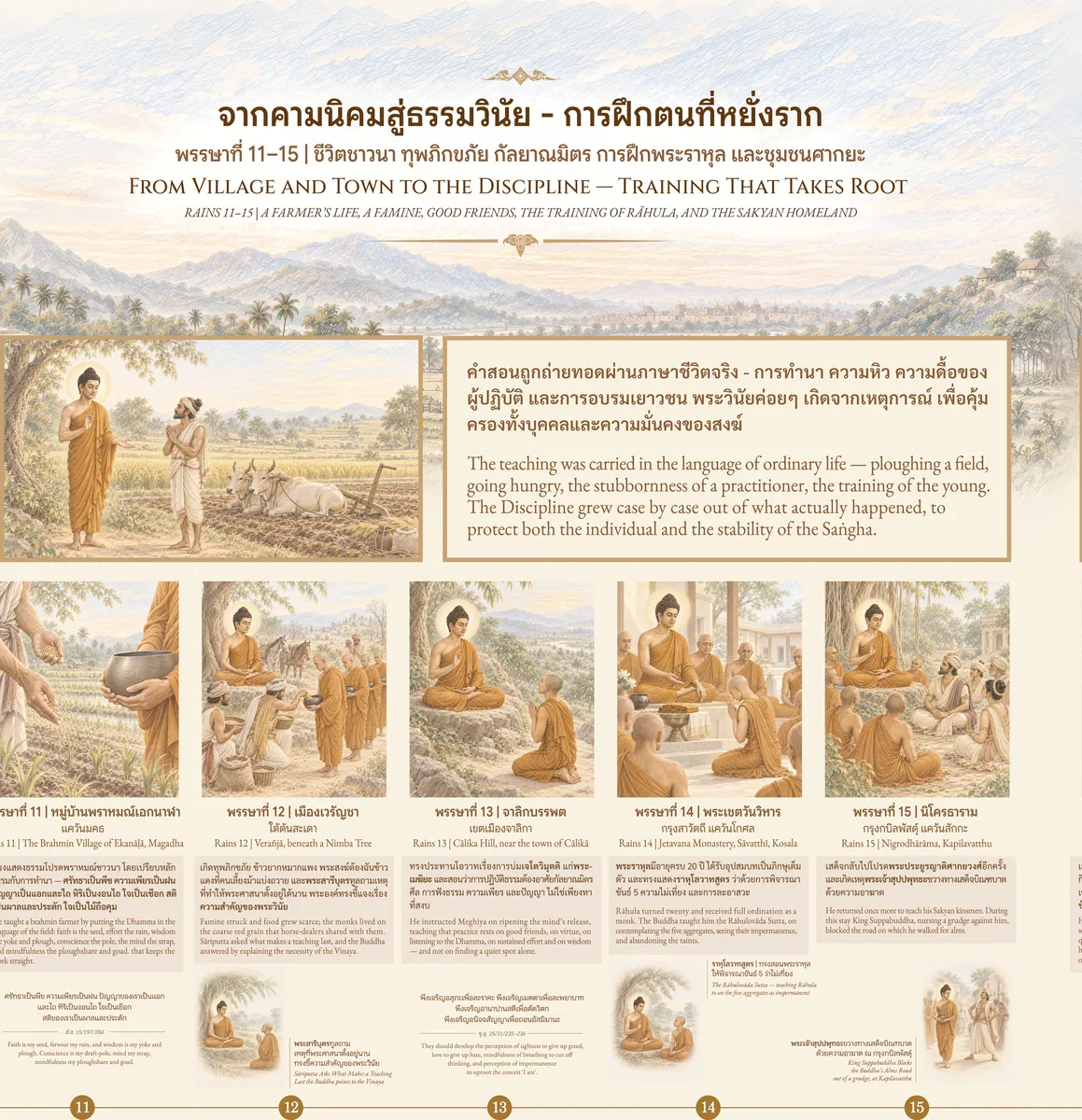
พรรษาที่ 11 หมู่บ้านพราหมณ์เอกนาฬา กสิภารทวาชพราหมณ์ต่อว่าว่า เราไถหว่านแล้วจึงกิน ท่านก็จงไถหว่านเองเถิด ตรัสตอบด้วยภาษาของชาวนา ศรัทธาเป็นพืช ความเพียรเป็นฝน ปัญญาเป็นแอกและไถ หิริเป็นงอนไถ ใจเป็นเชือก สติเป็นผาลและประตัก การไถนาของเรา มีอมตะเป็นผล พราหมณ์เลื่อมใส ขอบวช และบรรลุอรหัตตผล
พรรษาที่ 12 เวรัญชา เกิดทุพภิกขภัย พระสงฆ์ต้องฉันข้าวแดงสำหรับเลี้ยงม้า ที่พ่อค้าม้าแบ่งถวายตลอด 3 เดือน พระมหาโมคคัลลานะทูลขอใช้ ฤทธิ์แก้ความอดอยาก ทรงห้าม พระสารีบุตรทูลถามว่า เหตุใดศาสนา ของพระพุทธเจ้าบางพระองค์จึงตั้งอยู่นาน ทรงตอบว่า เพราะการบัญญัติสิกขาบท และการแสดงปาฏิโมกข์ ท่านทูลขอให้ทรงบัญญัติเสียแต่บัดนี้ ตรัสว่า จงรอก่อน สารีบุตร ตถาคตเท่านั้นจักรู้กาลอันควร
พรรษาที่ 13 จาลิกบรรพต พระเมฆิยะ พุทธอุปัฏฐากขณะนั้น ดื้อขอไปบำเพ็ญเพียรในสวนมะม่วงตามลำพัง แต่กลับถูกอกุศลวิตกครอบงำจนปฏิบัติไม่ได้ ทรงสอนว่า การบ่มจิตให้หลุดพ้น ต้องอาศัยกัลยาณมิตร ศีล การฟังธรรม ความเพียร และปัญญา มิใช่เพียงหาที่สงบ หลังพรรษานี้ ทรงแสดงมงคลสูตร และกรณียเมตตสูตร
พรรษาที่ 14 พระเชตวัน พระราหุล พระโอรส มีพระชนม์ครบ 20 ปี ได้อุปสมบท ทรงแสดงจูฬราหุโลวาทสูตร ให้พิจารณาขันธ์ 5 ว่าไม่เที่ยง ไม่ใช่ตัวตน พระราหุลบรรลุอรหัตตผล เด็กชายที่เคยวิ่งตามทูลขอมรดก บัดนี้ได้รับมรดกที่แท้จริง
พรรษาที่ 15 เสด็จกลับกบิลพัสดุ์ ประทับ ณ นิโครธาราม เจ้าศากยะมหานามะทูลถามว่า คฤหัสถ์จะปฏิบัติอย่างไรเมื่อพระองค์ไม่อยู่ ตรัสว่า ให้ตั้งอยู่ในศรัทธา ความเพียร สติ สมาธิ ปัญญา และเจริญอนุสสติ ซึ่งทำได้ทุกเวลา
แต่ในแผ่นดินเกิดนั้นเอง พระกรุณาต้องเผชิญความเกลียดชัง พระเจ้าสุปปพุทธะ พระบิดาของพระนางยโสธรา ผูกอาฆาตว่าพระองค์ทอดทิ้งธิดาของตน วันหนึ่งจึงปิดทางบิณฑบาต นั่งเสวยน้ำจัณฑ์ขวางกลางถนน พระพุทธองค์เสด็จกลับ ตรัสว่า ผู้ไม่ให้ทางแก่พระพุทธเจ้า ทำกรรมหนัก ในวันที่ 7 เขาจักถูกธรณีสูบที่เชิงบันไดปราสาทของตน พระราชาขึ้นไปอยู่ชั้น 7 ชักบันไดขึ้น ปิดประตูทุกบาน แต่วันที่ 7 ประตูเปิดเอง บันไดกลับมาตั้งที่เดิม แผ่นดินแยกออกที่เชิงบันไดนั้น ผู้ทำกรรมชั่ว จะหนีไปในอากาศ ในทะเล หรือในซอกเขา ก็ไม่พ้นกรรม
The eleventh rains, at the brahmin village of Ekanāḷā. The brahmin Kasibhāradvāja reproached him: we plough and sow, then we eat — you should plough and sow too. He answered in the farmer’s own language: faith is my seed, effort the rain, wisdom my yoke and plough, conscience the pole, the mind the strap, mindfulness the ploughshare and goad. My ploughing bears the deathless as its fruit. The brahmin went forth and became an arahant.
The twelfth rains, at Verañjā. Famine struck; the monks lived on coarse red grain meant for horses, shared with them by horse-dealers for three months. Moggallāna asked to use his powers against the famine, and was refused. Sāriputta asked why the teachings of some Buddhas lasted long. Because of the training rules, he replied, and the recitation of the Pāṭimokkha. Sāriputta asked him to lay down the rules at once. Wait, Sāriputta; the Tathāgata alone will know the time.
The thirteenth rains, at Cālika Hill. Meghiya, then his attendant, insisted on meditating alone in a mango grove, but was overrun by unwholesome thoughts. He taught that the mind’s release ripens through good friends, virtue, hearing the Dhamma, effort and wisdom — not merely by finding a quiet place. After these rains he taught the Maṅgala Sutta and the Karaṇīya Mettā Sutta.
The fourteenth rains, at Jetavana. Rāhula, the Buddha’s son, turned twenty and received full ordination. He taught him the Cūḷarāhulovāda Sutta, to see the five aggregates as impermanent and not-self. Rāhula attained arahantship. The boy who had run after his father asking for his inheritance now received the true one.
The fifteenth rains. He returned to Kapilavatthu, staying at Nigrodhārāma. Mahānāma the Sakyan asked how householders should practise when the Buddha was away: stand on faith, energy, mindfulness, concentration and wisdom, and cultivate recollection, which can be done at any time.
Yet in his own homeland, compassion had to face hatred. King Suppabuddha, Yasodharā’s father, bore a grudge that the Buddha had abandoned his daughter. One day he blocked the alms road and sat drinking in the middle of it; the Buddha turned back. One who denies a Buddha the road does a grave deed, he said; on the seventh day he will be swallowed by the earth at the foot of his own stairs. The king climbed to the seventh floor, drew up the stairs and barred every door. But on the seventh day the doors opened by themselves and the stairs stood in place; the earth opened at their foot. One who has done evil cannot escape it — in the sky, in the sea, or in a mountain cleft.
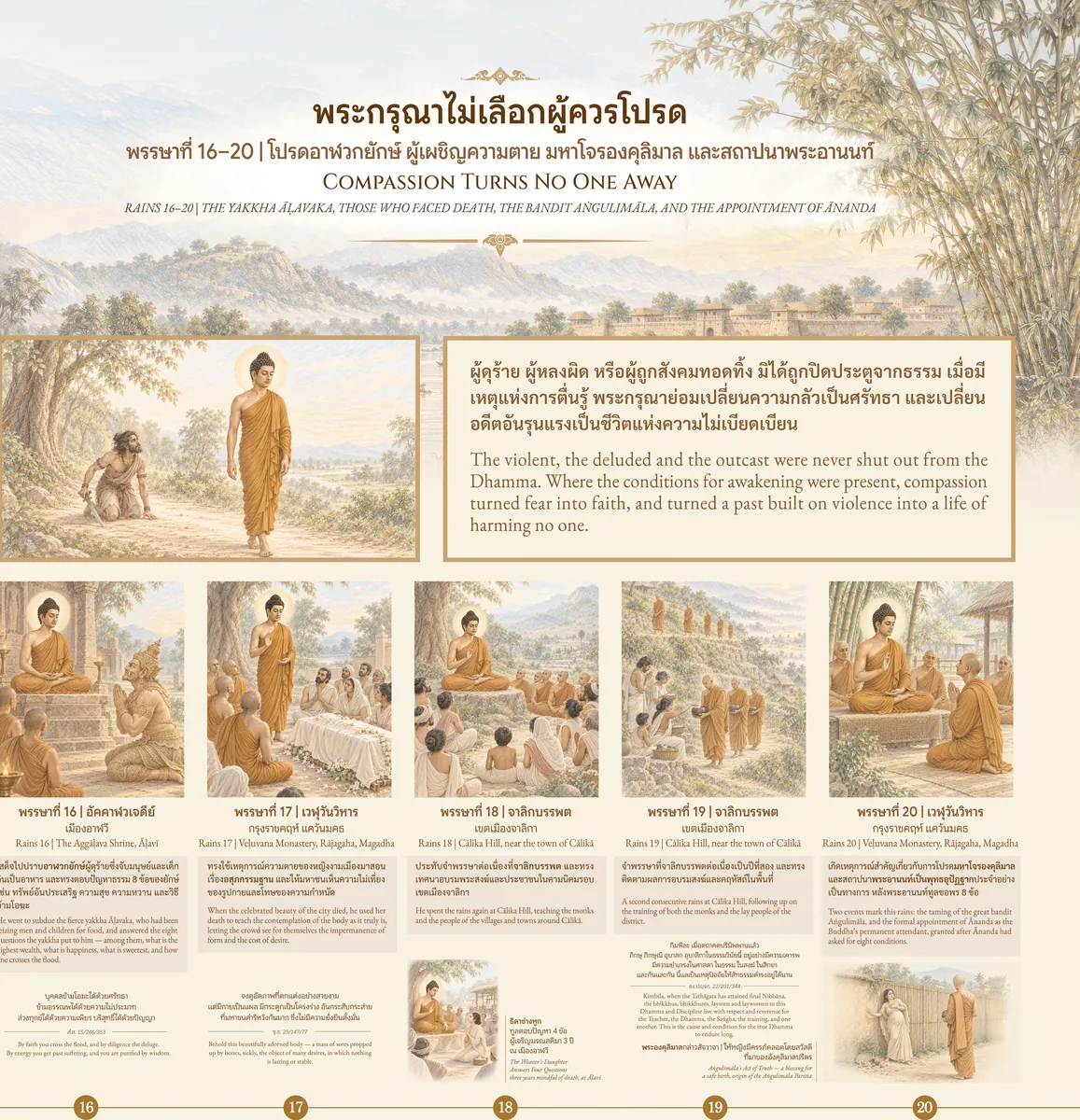
พรรษาที่ 16 เมืองอาฬวี อาฬวกยักษ์จับมนุษย์กินเป็นอาหาร พระพุทธองค์เสด็จไปประทับในวิมานของยักษ์เสียเอง ยักษ์สั่งให้ออก ก็เสด็จออก สั่งให้เข้า ก็เสด็จเข้า ครั้งที่ 4 ตรัสว่า เราจักไม่ออกอีก ทรงตอบปัญหาทั้ง 8 ข้อ ทรัพย์ประเสริฐคือศรัทธา สิ่งที่นำสุขมาให้คือธรรม รสเลิศคือสัจจะ ชีวิตประเสริฐด้วยปัญญา บุคคลข้ามโอฆะได้ด้วยศรัทธา ข้ามอรรณพได้ ด้วยความไม่ประมาท ล่วงทุกข์ได้ด้วยความเพียร บริสุทธิ์ได้ด้วยปัญญา ยักษ์ผู้กินคน กลายเป็นพระโสดาบัน
พรรษาที่ 17 ราชคฤห์ นางสิริมา หญิงงามเมือง น้องสาวของหมอชีวก ฟังธรรมจนเป็นโสดาบัน และถวายอาหารแก่ภิกษุทุกวัน ภิกษุหนุ่มรูปหนึ่งไปรับบิณฑบาตที่เรือนนาง เห็นความงามแล้วติดใจ จนกินไม่ได้นอนไม่หลับ ไม่นาน นางสิ้นชีวิตกะทันหัน ทรงขอให้เก็บร่างไว้ มิให้เผา วันที่ 4 ทรงให้ประกาศขาย ลดราคาลงจนให้เปล่า ก็ไม่มีผู้ใดต้องการ ทรงพาภิกษุรูปนั้นไปดู แล้วตรัสว่า จงดูอัตภาพที่ตกแต่งสวยงาม แต่มีกายเป็นแผล มีกระดูกเป็นโครงร่าง ซึ่งไม่มีความยั่งยืนตั้งมั่น
พรรษาที่ 18 และ 19 จาลิกบรรพต หลังออกพรรษาที่ 18 เสด็จกลับไปอาฬวี เพื่อโปรดคนเพียงคนเดียว ธิดาช่างหูกวัย 16 ผู้เจริญมรณสติมา 3 ปี ทรงรอจนนางกรอด้ายเสร็จ แล้วตรัสถาม เธอมาจากไหน ไม่ทราบ เธอจะไปไหน ไม่ทราบ เธอไม่ทราบหรือ ทราบ เธอทราบหรือ ไม่ทราบ นางอธิบายว่า ไม่ทราบว่ามาจากภพใด จะไปภพใด ทราบว่าต้องตาย แต่ไม่ทราบว่าเมื่อใด ตรัสว่า ทาริกานี้เป็นบัณฑิต นางบรรลุโสดาบัน แล้วไปส่งด้ายที่โรงหูก บิดาโกรธที่มาช้า พุ่งกระสวยใส่ นางสิ้นชีวิต ณ ที่นั้น บิดาเสียใจ ออกบวช และบรรลุอรหัตตผล
พรรษาที่ 19 พระกิมพิละทูลถามว่า อะไรทำให้พระศาสนาตั้งอยู่ไม่นาน ตรัสว่า เมื่อตถาคตปรินิพพานแล้ว หากพุทธบริษัทอยู่อย่างไม่เคารพ ในศาสดา ในธรรม ในสงฆ์ ในสิกขา และในกันและกัน พระสัทธรรมย่อมไม่ดำรงอยู่นาน
พรรษาที่ 20 ชายหนุ่มชื่ออหิงสกะ ผู้ไม่เบียดเบียน ถูกอาจารย์ลวงว่า วิชาจะสำเร็จ ต้องฆ่าคนให้ครบ 1,000 เขาซุ่มฆ่าคนในป่าแคว้นโกศล ตัดนิ้วร้อยเป็นพวงมาลัย จนได้ชื่อ องคุลิมาล ขาดอีกนิ้วเดียว ทรงเห็นว่าโจรกำลังจะฆ่า มารดาของตน จึงเสด็จเข้าป่าเพียงลำพัง องคุลิมาลวิ่งไล่สุดกำลัง แต่ไล่ไม่ทันผู้ที่เดินอยู่ตามปกติ ตะโกนว่า หยุดก่อน สมณะ เราหยุดแล้ว องคุลิมาล เราหยุดเบียดเบียนสัตว์ทั้งหลาย ท่านต่างหากที่ยังไม่หยุด โจรทิ้งดาบ ทูลขอบวช เมื่อถูกชาวเมืองขว้างจนศีรษะแตก ตรัสว่า จงอดทน ท่านบรรลุอรหัตตผล และสัจวาจาที่ช่วยหญิงคลอดยาก คือที่มาของอังคุลิมาลปริตร
พรรษาเดียวกัน ตรัสว่า บัดนี้เราชราแล้ว จงเลือกภิกษุรูปหนึ่งเป็นอุปัฏฐากประจำ พระอานนท์รับหน้าที่ โดยทูลขอพร 8 ประการ 4 ข้อแรกปฏิเสธลาภทุกอย่าง 4 ข้อหลังขอเพียงได้เข้าเฝ้า ได้ทูลถาม และขอให้ทรงแสดงธรรมที่ท่านไม่ได้ฟัง ซ้ำอีกครั้ง เพราะพรข้อนี้ พระธรรมจำนวนมหาศาลจึงถูกจดจำมาถึงเรา
The sixteenth rains, at Āḷavī. The yakkha Āḷavaka ate human beings; the Buddha went and sat in the yakkha’s own dwelling. Ordered out, he went out; ordered in, he came in — until the fourth time he said: I will not go out again. He answered all eight questions: the noblest wealth is faith; what brings happiness is the Dhamma; the finest taste is truth; the best life is lived by wisdom. By faith one crosses the flood; one crosses the sea by heedfulness; one overcomes suffering by effort, and is purified by wisdom. The man-eater became a stream-enterer.
The seventeenth rains, at Rājagaha. Sirimā, the celebrated beauty and sister of the physician Jīvaka, heard the Dhamma, became a stream-enterer, and fed the monks every day. A young monk who came to her house for alms was so taken by her beauty that he could neither eat nor sleep. Soon after, she died suddenly. The Buddha asked that the body be kept, not cremated. On the fourth day he had it offered for sale; the price fell to nothing, and still no one wanted it. He brought the young monk to see it, and said: Behold this beautifully adorned body, a mass of sores propped up by bones, in which nothing is lasting or stable.
The eighteenth and nineteenth rains, at Cālika Hill. After the eighteenth rains he went back to Āḷavī for the sake of one person: a weaver’s daughter of sixteen who had practised mindfulness of death for three years. He waited until she had wound her thread, then asked: Where have you come from? — I do not know. Where are you going? — I do not know. Do you not know? — I know. Do you know? — I do not know. She explained: I do not know from which existence I came, or to which I go; I know I must die, but not when. This girl is wise, he said. She became a stream-enterer and took the thread to the weaving shed; her father, angry at her lateness, flung the shuttle, and she died on the spot. Grieving, he went forth and became an arahant.
In the nineteenth rains Kimbila asked what makes the teaching not last long. When the Tathāgata has passed away, he answered, if the fourfold assembly lives without respect for the Teacher, the Dhamma, the Saṅgha, the training and one another, the true Dhamma does not last long.
The twentieth rains. A young man named Ahiṃsaka, the harmless one, was deceived by his teacher: to complete your learning, kill a thousand people. He lay in wait and killed people in the forests of Kosala, stringing their fingers into a garland — hence the name Aṅgulimāla. He was one finger short. Seeing that the bandit was about to kill his own mother, the Buddha walked into the forest alone. Aṅgulimāla ran with all his strength, yet could not catch a man walking at an ordinary pace. He shouted: Stop, recluse! I have stopped, Aṅgulimāla. I have stopped harming living beings — it is you who have not. He flung down his sword and asked to be ordained. When the townspeople stoned him, the Buddha said: bear it. He became an arahant, and his act of truth for a woman in labour is the origin of the Aṅgulimāla Paritta.
In the same rains he said: I am old now — choose a monk to attend me permanently. Ānanda accepted, asking for eight boons: four refusing every material gain, four asking only for access and the right to ask questions, and that any teaching he missed be repeated to him. Because of that boon, so much of the Dhamma was remembered and has reached us.
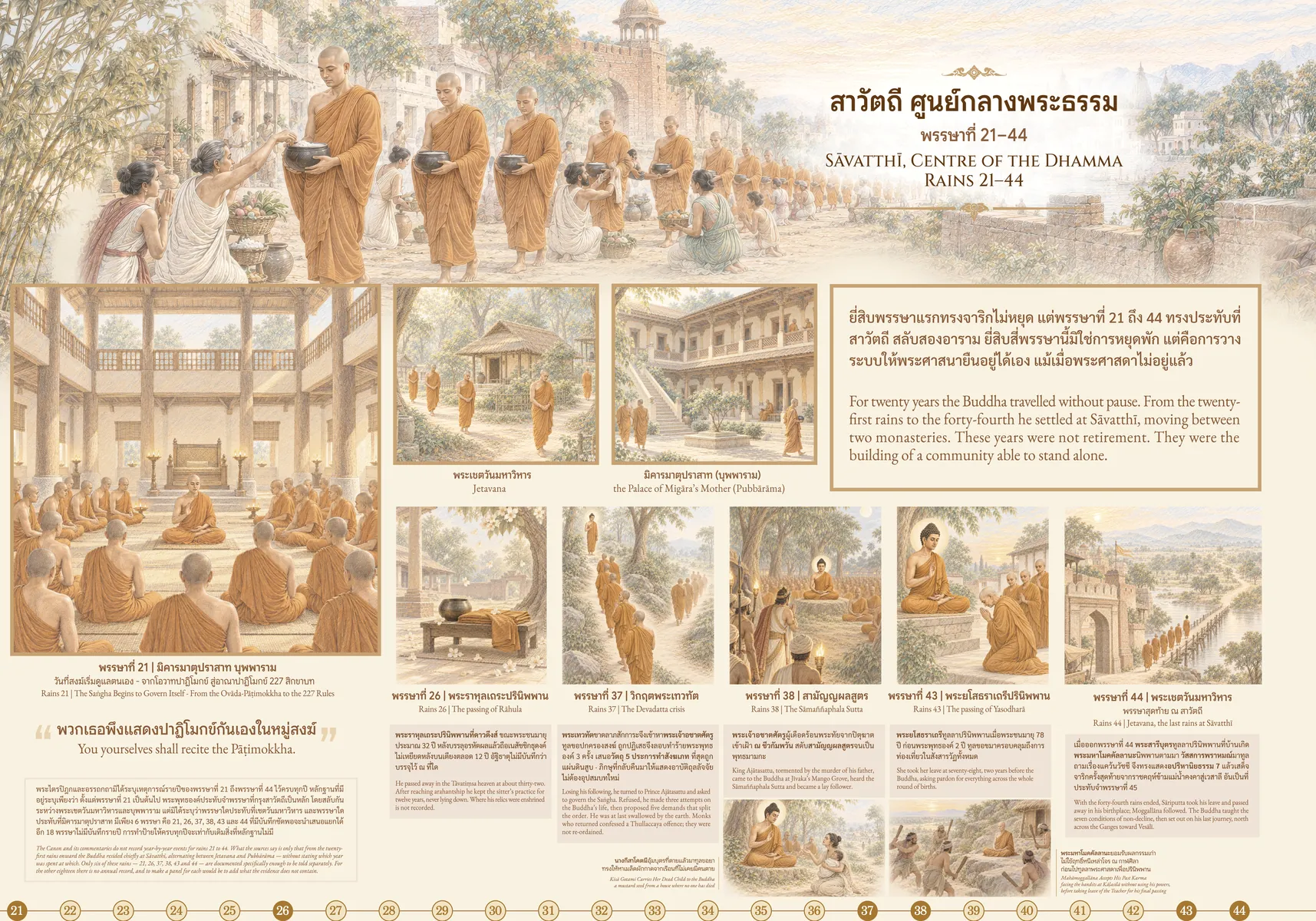
20 พรรษาแรก ทรงจาริกไม่หยุด แต่พรรษาที่ 21 ถึง 44 ทรงประทับที่สาวัตถีเป็นหลัก สลับ 2 อาราม 24 พรรษานี้มิใช่การหยุดพัก แต่คือการวางระบบให้พระศาสนายืนอยู่ได้เอง
พระเชตวัน เกิดจากศรัทธาของ สุทัตตะ เศรษฐีที่ผู้คนเรียกว่า อนาถบิณฑิกะ เพราะชอบให้ทานแก่คนยากไร้ เพียงได้ยินคำว่า พระพุทธเจ้า ท่านก็ปีติจนนอนไม่หลับ ออกเดินไปเฝ้าตั้งแต่ยังมืด ท่านซื้อสวนของเจ้าเชต ด้วยการปูเหรียญทองเต็มพื้นที่ ในวาระสุดท้าย ท่านได้ฟังธรรมจากพระสารีบุตร ท่านร้องไห้ มิใช่เพราะกลัวตาย แต่เสียดายที่ไม่เคยได้ฟังธรรม ลึกซึ้งด้วยถ้อยคำง่ายเช่นนี้มาก่อน
บุพพาราม เกิดจากศรัทธาของสตรี วิสาขา บรรลุโสดาบันตั้งแต่ 7 ขวบ เช้าวันหนึ่ง มิคารเศรษฐี บิดาสามี กินอาหารโดยไม่สนใจภิกษุที่ยืนบิณฑบาตหน้าเรือน นางกล่าวว่า นิมนต์ไปข้างหน้าเถิด บิดาสามีดิฉันกำลังบริโภคของเก่า นางชี้แจงว่า ท่านมิได้สร้างบุญใหม่ มีแต่กินบุญเก่า เศรษฐีได้ฟังธรรม บรรลุโสดาบัน และยกนางเป็นมารดา นางทูลขอพร 8 ประการ ข้อแรกคือผ้าอาบน้ำฝน เมื่อลืมเครื่องประดับมหาลดาปสาธน์ไว้ในวิหาร นางไม่นำมาใช้อีก ขายแล้วสร้างปราสาท 1,000 ห้อง ถวายเป็นมิคารมาตุปราสาท
พรรษาที่ 21 มิคารมาตุปราสาท คืนอุโบสถคืนหนึ่ง ทรงประทับนิ่งตลอด 3 ยาม ไม่ทรงแสดงปาฏิโมกข์ เพราะมีภิกษุทุศีลนั่งปนอยู่ แล้วตรัสว่า นับแต่นี้ พวกเธอพึงแสดงปาฏิโมกข์กันเองในหมู่สงฆ์ สงฆ์จึงสวดอาณาปาฏิโมกข์ 227 สิกขาบท ทุกกึ่งเดือน สืบมาจนวันนี้ อำนาจเปลี่ยนจากตัวบุคคล มาสู่กติกาที่หมู่คณะรักษาร่วมกัน
ในปีใดปีหนึ่งของช่วงนี้ นางกีสาโคตมีอุ้มร่างลูกที่ตายแล้วมาทูลขอยา ตรัสว่า จงไปหาเมล็ดผักกาดจากเรือนที่ไม่เคยมีคนตาย นางเคาะทุกประตูจนค่ำ ทุกบ้านมีผักกาด แต่ทุกบ้านเคยมีคนตาย นางจึงเข้าใจว่า ความตายมิได้ เกิดกับลูกของนางเพียงคนเดียว ยานั้น มิใช่สำหรับผู้ตาย แต่สำหรับผู้ที่ยังมีชีวิตอยู่
พรรษาที่ 26 พระราหุลเถระปรินิพพานก่อนพระพุทธบิดา พรรษาที่ 37 พระเทวทัตแสดงฤทธิ์ให้ อชาตศัตรูราชกุมารเลื่อมใส แล้วทูลขอปกครองสงฆ์ ตรัสว่า แม้สารีบุตรและโมคคัลลานะ เรายังไม่มอบ เทวทัตยุให้อชาตศัตรูปลงพระชนม์พระเจ้าพิมพิสาร และลอบทำร้ายพระพุทธองค์ 3 ครั้ง นักฆ่าที่ส่งไปกลับเลื่อมใส ศิลาที่กลิ้งลงมาทำให้ห้อพระโลหิต ช้างนาฬาคีรีที่มอมเหล้า พระอานนท์ยืนขวางหน้า แต่ด้วยเมตตา ช้างกลับหมอบลงแทบพระบาท ท้ายที่สุด เทวทัตสำนึกผิด ให้หามมาขอขมา แต่ถูกแผ่นดินสูบหน้าพระเชตวัน ก่อนจมลง ได้ถึงพระพุทธเจ้าเป็นที่พึ่ง
พรรษาที่ 38 พระเจ้าอชาตศัตรู ผู้ทำปิตุฆาต เดือดร้อนพระทัย คืนเพ็ญคืนหนึ่ง หมอชีวกพาเสด็จไปเฝ้า ทรงแสดงสามัญญผลสูตร พระราชาประกาศตนเป็นพุทธมามกะ ปีเดียวกัน แคว้นโกศลล่มสลาย พระเจ้าปเสนทิโกศลถูกชิงราชสมบัติ สวรรคตอย่างโดดเดี่ยวในศาลาริมทาง วิฑูฑภะพระโอรสยกทัพไปล้างวงศ์ศากยะ พระพุทธองค์เสด็จไปห้ามถึง 3 ครั้ง ครั้งสุดท้าย ทรงเห็นกรรมเก่าของศากยะ จึงไม่เสด็จไปอีก คืนนั้นเอง วิฑูฑภะถูกน้ำหลากพัดไปพร้อมกองทัพ
พรรษาที่ 43 พระยโสธราเถรี ทูลลาปรินิพพาน เมื่อพระชนมายุ 78 ก่อนพระพุทธองค์ 2 ปี ส่วนอีก 18 พรรษาของช่วงนี้ คัมภีร์ไม่ได้บันทึกเหตุการณ์รายปีไว้เลย
เมื่อออกพรรษาที่ 44 การอำลาเริ่มขึ้น พระสารีบุตรทูลลาไปปรินิพพานในห้องที่ท่านเกิด เพื่อโปรดมารดาผู้ยังไม่เลื่อมใส คำอำลาของท่านคือ จงเป็นผู้ไม่ประมาทเถิด อีกกึ่งเดือน พระมหาโมคคัลลานะ ถูกโจรทำร้าย ณ กาฬศิลา ท่านเห็นว่ากรรมเก่าตามมาทัน จึงไม่ใช้ฤทธิ์หนี แล้วมาทูลลา พระพุทธองค์ตรัสว่า เราเหมือนต้นไม้ใหญ่ ที่กิ่งใหญ่ทั้ง 2 หักลง
วัสสการพราหมณ์มาทูลว่า พระเจ้าอชาตศัตรูจะไปปราบแคว้นวัชชี ตรัสว่า ตราบใดที่ชาววัชชียังตั้งอยู่ใน อปริหานิยธรรม 7 ประการ ไม่มีผู้ใดทำลายได้ เสด็จจาริกครั้งสุดท้ายขึ้นเหนือ ข้ามแม่น้ำคงคา ที่เวสาลี ทรงรับสวนมะม่วงของนางอัมพปาลี หญิงคณิกา อารามสุดท้ายในพระชนม์ชีพ อารามแรกมาจากพระราชา อารามสุดท้ายมาจากหญิงงามเมือง
For the first twenty rains he travelled without pause. But from the twenty-first rains to the forty-fourth he settled chiefly at Sāvatthī, between two monasteries. These twenty-four rains were not a retirement, but the building of a system that lets the teaching stand on its own.
Jetavana was born of the faith of Sudatta, the merchant people called Anāthapiṇḍika, for his gifts to the destitute. At the mere word Buddha he was so full of joy he could not sleep, and set out before dawn. He bought Prince Jeta’s park by covering the ground with gold coins. At the end of his life, he heard the Dhamma from Sāriputta. He wept — not from fear of death, but with regret that he had never before heard a teaching so deep in words so plain.
Pubbārāma was born of a woman’s faith. Visākhā became a stream-enterer at seven. One morning her father-in-law, the merchant Migāra, ate on, ignoring a monk standing for alms at the door. Please go on, venerable sir, she said; my father-in-law is eating stale food. She explained: he makes no new merit, but lives on the old. Migāra heard the Dhamma, became a stream-enterer and called her his mother. She asked for eight boons, the first of them the rains-bathing cloth. When she left her great jewelled ornament in the monastery, she would not wear it again; she sold it and built a palace of a thousand rooms — the Palace of Migāra’s Mother.
The twenty-first rains, at the Palace of Migāra’s Mother. One Uposatha night he sat silent through all three watches and would not recite the Pāṭimokkha, because an immoral monk sat among them. Then he said: from now on, you yourselves shall recite the Pāṭimokkha in the Saṅgha. Since then the Saṅgha has recited the 227 rules every fortnight, to this day. Authority passed from a person to a code the community keeps together.
In one of these years, Kisā Gotamī carried her dead child to the Buddha and begged for medicine. Bring me mustard seed, he said, from a house where no one has ever died. She knocked on every door until dark; every house had mustard seed, and every house had known a death. She understood that death had not come to her child alone. The medicine was not for the dead, but for the living.
In the twenty-sixth rains Rāhula attained final Nibbāna before his father. In the thirty-seventh, Devadatta used displays of power to win over Prince Ajātasattu, then asked to govern the Saṅgha. Not even to Sāriputta and Moggallāna would I hand it, he said. Devadatta urged Ajātasattu to kill King Bimbisāra, and made three attempts on the Buddha’s life: the assassins he sent were won over; a boulder rolled down at him and drew blood; the drunken elephant Nāḷāgiri — Ānanda stepped in front of it — but under his loving-kindness the elephant knelt at his feet. At last Devadatta repented and had himself carried to ask forgiveness, but was swallowed by the earth before Jetavana; as he sank, he took refuge in the Buddha.
The thirty-eighth rains. King Ajātasattu, who had killed his father, was tormented by remorse; one full-moon night Jīvaka brought him to the Buddha. He taught the Sāmaññaphala Sutta, and the king declared himself a lay follower. The same year Kosala fell. King Pasenadi lost his throne and died alone in a wayside shelter. His son Viḍūḍabha marched to destroy the Sakyans; three times the Buddha went and turned him back. The fourth time, seeing the Sakyans’ own past deeds, he did not go. That same night Viḍūḍabha was swept away with his army by a flood.
The forty-third rains: Yasodharā took her leave for final Nibbāna at seventy-eight, two years before the Buddha. For the other eighteen rains of this period the texts record no year-by-year events at all.
When the forty-fourth rains ended, the leave-taking began. Sāriputta took leave to pass away in the room where he was born, to bring his mother, not yet a believer, to faith. His parting words were: be heedful. A fortnight later, Mahāmoggallāna was attacked by bandits at Kāḷasilā. Seeing that old karma had caught up with him, he did not use his powers to escape, and came to take his leave. The Buddha said: I am like a great tree whose two great boughs have broken away.
The brahmin Vassakāra came to tell him that King Ajātasattu would crush the Vajjians. As long as the Vajjians, the Buddha said, hold to the seven conditions of non-decline, no one can destroy them. He set out on his last journey north and crossed the Ganges. At Vesālī he accepted the mango grove of Ambapālī, the courtesan — the last monastery of his life. The first monastery had come from a king; the last came from a courtesan.
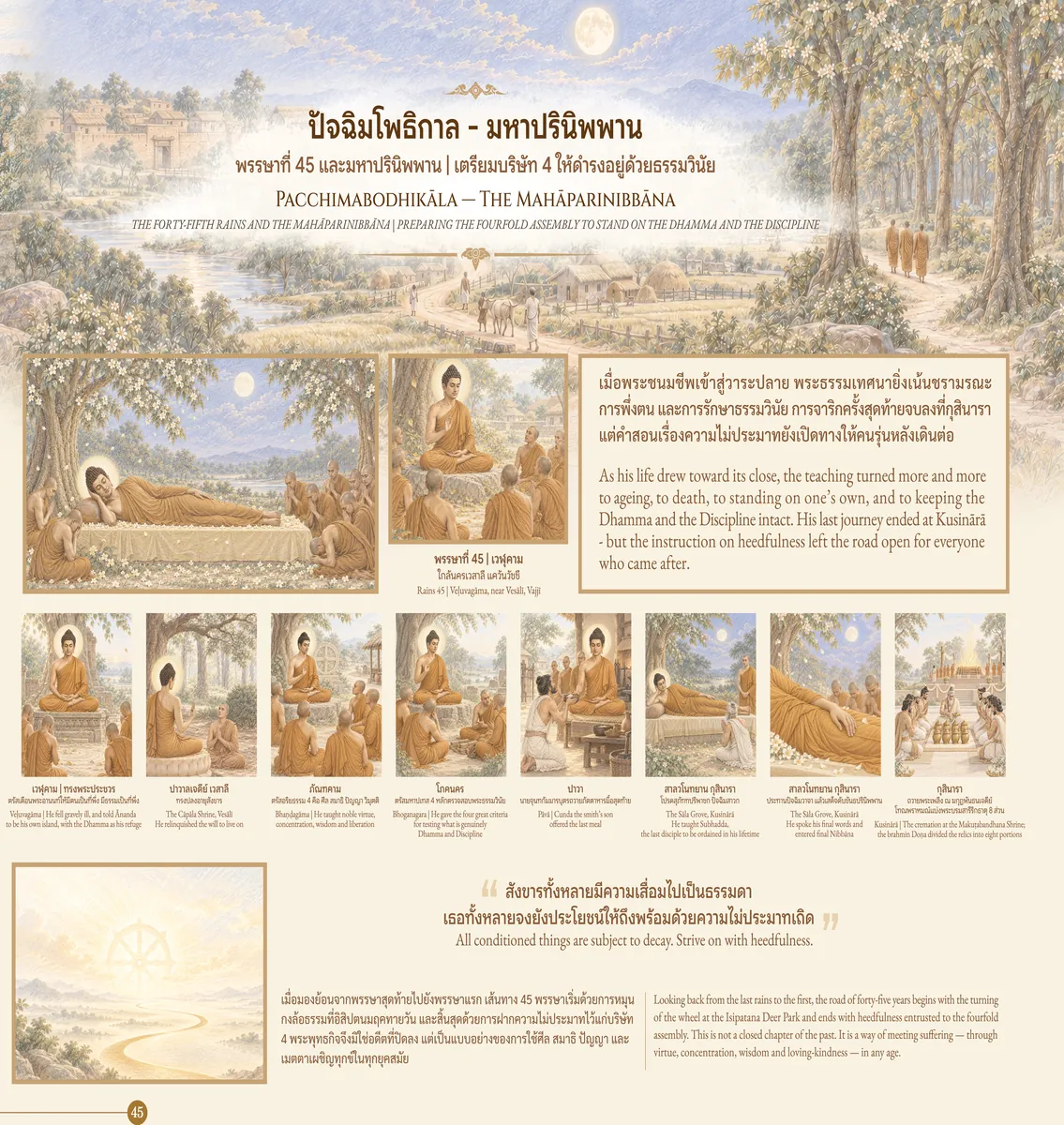
พรรษาที่ 45 เวฬุคาม ใกล้เวสาลี ทรงให้ภิกษุแยกย้ายไปจำพรรษารอบเมือง ส่วนพระองค์ประทับ ลำพังกับพระอานนท์ เพราะทรงทราบว่าเหลือเวลาอีกเพียง 10 เดือน ระหว่างพรรษา ทรงพระประชวรหนัก แต่ทรงข่มเวทนาไว้ด้วยสมาธิ ตรัสว่า เราแสดงธรรมไม่มีกำมือของอาจารย์ คือเปิดเผยหมดสิ้น ไม่มีสิ่งใดกำไว้ ไม่มีวิชาใดหวงแหน บัดนี้เราชราแล้ว ร่างกายเหมือน เกวียนเก่าที่เดินไปได้ด้วยการแซมไม้ไผ่ เธอทั้งหลาย จงมีตนเป็นเกาะ มีธรรมเป็นที่พึ่ง อย่ามีสิ่งอื่นเป็นที่พึ่งเลย
ออกพรรษาแล้ว ที่ปาวาลเจดีย์ ตรัสเป็นนัยถึง 3 ครั้งว่า ผู้เจริญอิทธิบาท 4 อาจอยู่ได้ตลอดกัป แต่พระอานนท์ไม่เฉลียวใจ มิได้ทูลขอให้ทรงอยู่ต่อ มารมาทูลเตือนปฏิญญาเก่า ตรัสว่า อีก 3 เดือน ตถาคตจักปรินิพพาน ทรงปลงอายุสังขาร แผ่นดินไหว แล้วทรงประชุมสงฆ์ แสดงโพธิปักขิยธรรม 37 ประการ รวบยอดคำสอน 45 ปีไว้ในโครงเดียว
หลังบิณฑบาตในเวสาลีครั้งสุดท้าย ทรงผันพระวรกายทอดพระเนตรเมือง ดุจพญาช้างเหลียวหลัง ที่ภัณฑคาม ตรัสอริยธรรม 4 คือศีล สมาธิ ปัญญา วิมุตติ ที่โภคนคร ทรงวางมหาปเทส 4 แม้ผู้ใดอ้างว่าฟังมาจากพระโอษฐ์ ก็อย่าเพิ่งเชื่อ ให้สอบทานกับพระสูตร เทียบเคียงกับพระวินัย ก่อน
ที่ปาวา นายจุนทะถวายภัตตาหาร มีสุกรมัททวะ ตรัสให้ถวายพระองค์เพียงผู้เดียว ที่เหลือให้ฝังดิน หลังเสวย ทรงพระประชวรหนัก แต่ตรัสเพียงว่า อานนท์ เราจักไปกุสินารา ระหว่างทาง ปุกกุสะถวายผ้าคู่สีทอง เมื่อทาบพระวรกาย ผ้าทองกลับดูหม่น และทรงห่วงนายจุนทะ ตรัสสั่งให้บอกเขาว่า บิณฑบาต 2 คราวมีผลเสมอกัน ยิ่งกว่าบิณฑบาตใดๆ มื้อก่อนตรัสรู้ และมื้อก่อนปรินิพพาน
คืนเพ็ญเดือนวิสาขะ สาลวโนทยาน กุสินารา ทรงบรรทมสีหไสยาระหว่างต้นสาละคู่ ดอกสาละบานนอกฤดู โปรยลงบูชา ตรัสว่า นี่มิใช่การบูชาสูงสุด ผู้ปฏิบัติธรรมสมควรแก่ธรรม ชื่อว่าบูชาตถาคตอย่างยอดเยี่ยม พระอานนท์ทูลถามว่า จะมีสิ่งใดให้ระลึกถึงพระองค์ ทรงตอบด้วยสังเวชนียสถาน 4 ที่ประสูติ ตรัสรู้ แสดงปฐมเทศนา และปรินิพพาน คือเรื่องราวบนผนังอีกด้านของห้องนี้ พระอานนท์ออกไปยืนร้องไห้ลำพัง ทรงเรียกมาตรัสว่า อย่าเศร้าโศกเลย จงเพียรต่อไป เธอจักสิ้นอาสวะในไม่ช้า
ราตรีนั้น สุภัททปริพาชก นักบวชชรา ขอเข้าเฝ้า พระอานนท์ห้ามถึง 3 ครั้ง แต่ทรงรับสั่งให้เข้ามา ตรัสว่า ธรรมวินัยใดมีอริยมรรคมีองค์ 8 ธรรมวินัยนั้นย่อมมีพระอริยบุคคล หากภิกษุยังปฏิบัติชอบ โลกนี้จะไม่ว่างจากพระอรหันต์ สุภัททะบวช และบรรลุอรหัตตผลในคืนนั้น เป็นปัจฉิมสาวก
แล้วตรัสว่า ธรรมและวินัยที่เราแสดงแล้ว บัญญัติแล้ว จักเป็นศาสดาของเธอทั้งหลาย เมื่อเราล่วงลับไป มิได้ทรงตั้งผู้ใดสืบทอด ทรงเปิดโอกาสให้ถามถึง 3 ครั้ง ไม่มีผู้ใดถาม แล้วตรัสพระวาจาสุดท้าย
สังขารทั้งหลาย มีความเสื่อมไปเป็นธรรมดา เธอทั้งหลาย จงยังประโยชน์ให้ถึงพร้อม ด้วยความไม่ประมาทเถิด
ทรงเข้าฌานตามลำดับ แล้วเสด็จ ดับขันธปรินิพพานในปัจฉิมยามแห่งราตรี แผ่นดินไหว ท้าวสหัมบดีพรหม ผู้เคยอาราธนา ให้ทรงแสดงธรรมเมื่อแรกตรัสรู้ มากล่าวคำปิดฉาก สัตว์ทั้งปวงจักต้องทอดทิ้งร่างกายไว้ในโลก แม้พระสัมมาสัมพุทธเจ้า ท้าวสักกะกล่าวว่า สังขารทั้งหลายไม่เที่ยงหนอ ความสงบระงับสังขารเหล่านั้น เป็นสุข
7 วัน เจ้ามัลละบูชาพระบรมศพ แล้วอัญเชิญสู่มกุฏพันธนเจดีย์ จุดไฟ แต่ไฟไม่ติด ระหว่างทาง พระมหากัสสปะได้ยินภิกษุชรารูปหนึ่งพูดว่า ดีแล้วที่พระศาสดาไม่อยู่ จะได้ไม่มีใครคอยห้าม คำพูดนั้นทำให้ท่านดำริจะสังคายนาพระธรรมวินัย เมื่อท่านมาถึงและถวายบังคมพระบาท จิตกาธานก็ลุกโพลงขึ้นเอง กษัตริย์ 8 แคว้นยกทัพมาขอ พระบรมสารีริกธาตุ ถึงขั้นจะรบกัน โทณพราหมณ์ห้าม แล้วแบ่งเป็น 8 ส่วนเท่ากัน ไปบรรจุในสถูปทั้ง 8 แคว้น พระธรรมเดินทางต่อไป โดยไม่มีพระศาสดา
เมื่อมองย้อนจากพรรษาสุดท้ายไปยังพรรษาแรก เส้นทาง 45 ปี เริ่มด้วยการหมุนกงล้อธรรม และจบด้วยการฝากความไม่ประมาทไว้แก่พุทธบริษัท 4 พระองค์มิได้เลือกว่าผู้ใดควรโปรด และมิได้ใช้อำนาจบังคับผู้ใดแม้แต่ครั้งเดียว พระพุทธกิจจึงมิใช่อดีตที่ปิดลง แต่เป็นแบบอย่างของการเผชิญทุกข์ ด้วยศีล สมาธิ ปัญญา และเมตตา ในทุกยุคสมัย
พระองค์เสด็จดำเนินด้วยพระบาทตลอด 45 ปี เพื่อให้ธรรมเดินทางมาถึงเรา คำถามที่เหลืออยู่ มีเพียงว่า เราจะเดินต่อไปอย่างไร
The forty-fifth rains, at Veḷuvagāma near Vesālī. He sent the monks to spend the rains around the city, and stayed alone with Ānanda, knowing only ten months remained. During the rains he fell gravely ill, but held the pain down by concentration. I have taught with no teacher’s closed fist, he said — everything laid open, nothing held back, nothing kept for a chosen few. I am old now, and this body is like a worn-out cart kept going by being patched with bamboo. Be islands unto yourselves; let the Dhamma be your refuge. Seek no other refuge.
After the rains, at the Cāpāla Shrine, he hinted three times that one who has developed the four bases of power could live on for an aeon; but Ānanda did not take the hint, and did not ask him to stay. Māra came to remind him of his old pledge. He said: In three months the Tathāgata will attain final Nibbāna. He relinquished the will to live on, and the earth quaked. Then he gathered the Saṅgha and taught the thirty-seven factors of awakening — forty-five years of teaching in a single frame.
After his last alms round in Vesālī he turned his whole body to look back at the city, as an elephant turns. At Bhaṇḍagāma he taught the four noble things: virtue, concentration, wisdom, liberation. At Bhoganagara he gave the four great references: even if someone claims to have heard it from the Buddha’s own lips, do not believe it yet — first test it against the Suttas and compare it with the Vinaya.
At Pāvā, Cunda offered a meal that included sūkaramaddava; the Buddha had it served to himself alone and the rest buried. After eating, he fell gravely ill, yet said only: Ānanda, let us go to Kusinārā. On the way, Pukkusa offered a pair of gold-coloured robes; against the Buddha’s body, the gold looked dull. And he thought of Cunda, and sent word to him: two offerings of food bear equal fruit, greater than any other — the meal before the awakening, and the meal before the passing away.
The full moon of Visākha, in the sāla grove at Kusinārā. He lay on his right side, like a lion, between the twin sāla trees, which blossomed out of season and rained flowers on him in homage. This is not the highest honour, he said; whoever practises the Dhamma in accordance with the Dhamma honours the Tathāgata supremely. Ānanda asked what there would be to remember him by. He answered with the four places of pilgrimage: where he was born, awakened, first taught and passed away — the story on the wall across this room. Ānanda went out and wept alone. The Buddha called him back: Do not grieve; keep striving, and soon you will be free of the taints.
That night the aged wanderer Subhadda asked to see him; three times Ānanda refused, but the Buddha had him brought in. Wherever the noble eightfold path is found, he said, noble disciples are found; as long as monks practise rightly, the world will not be empty of arahants. Subhadda was ordained and became an arahant that very night — the last disciple.
Then he said: the Dhamma and the Discipline I have taught and laid down shall be your Teacher when I am gone. He named no successor. Three times he invited questions; no one spoke. Then he gave his final words.
All conditioned things are subject to decay. Strive on with heedfulness.
He entered the absorptions in order, and attained final Nibbāna in the last watch of the night; the earth quaked. Brahmā Sahampati, who had once pleaded with him to teach the Dhamma, spoke the closing words: all beings must lay down the body in this world — even a perfectly awakened Buddha. Sakka said: impermanent indeed are all conditioned things; their stilling is bliss.
For seven days the Mallas honoured the body, then carried it to the Makuṭabandhana Shrine; the pyre would not light. On the road, Mahākassapa heard an old monk say: good that the Teacher is gone — now no one will forbid us anything. Those words made him resolve to hold a Council of the Dhamma and Vinaya. When he arrived and bowed at the Buddha’s feet, the pyre burst into flame of itself. Kings of eight realms marched to claim the relics, ready to fight; the brahmin Doṇa stopped them and divided the relics into eight equal portions, for stupas in the eight realms. And the Dhamma travelled on, without its Teacher.
Looking back from the last rains to the first, the road of forty-five years begins with the turning of the wheel and ends with heedfulness entrusted to the fourfold assembly. He turned no one away, and not once did he use force on anyone. So his work is not a closed chapter of the past, but a model for meeting suffering with virtue, concentration, wisdom and loving-kindness, in every age.
He walked on foot for forty-five years so that the Dhamma could reach us. The only question that remains is how we will walk on.
พระพุทธกิจ 5 คือ กิจวัตรแห่งพระมหากรุณาที่ทรงบำเพ็ญทุกวันมิได้ขาด
The Five Daily Duties were the Buddha’s great compassion, practised without a single day’s break.
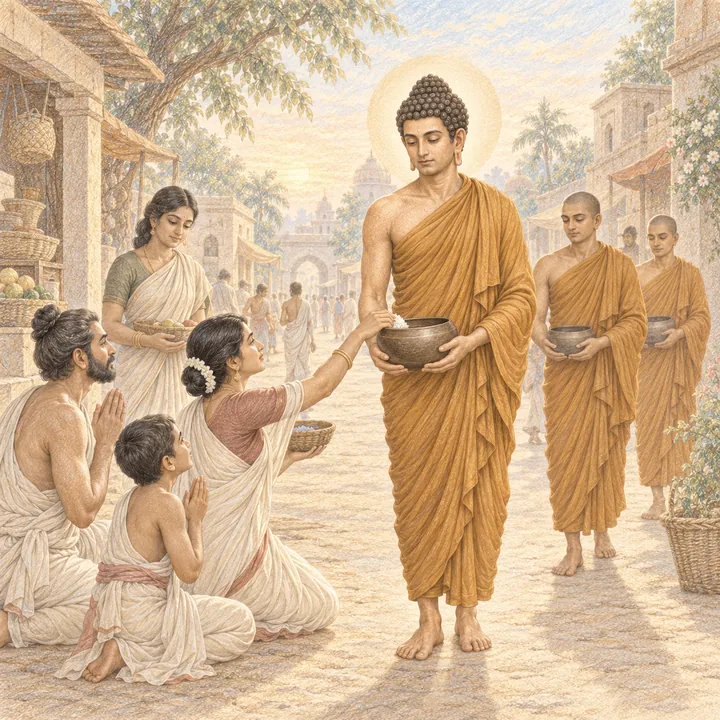
เวลาเช้า · Morning
เสด็จบิณฑบาต โปรดคฤหัสถ์ กษัตริย์ พราหมณ์ คหบดี และบุคคลผู้ควรโปรด
The alms round, and the teaching of householders, kings, brahmins, merchants and whoever was ready to hear
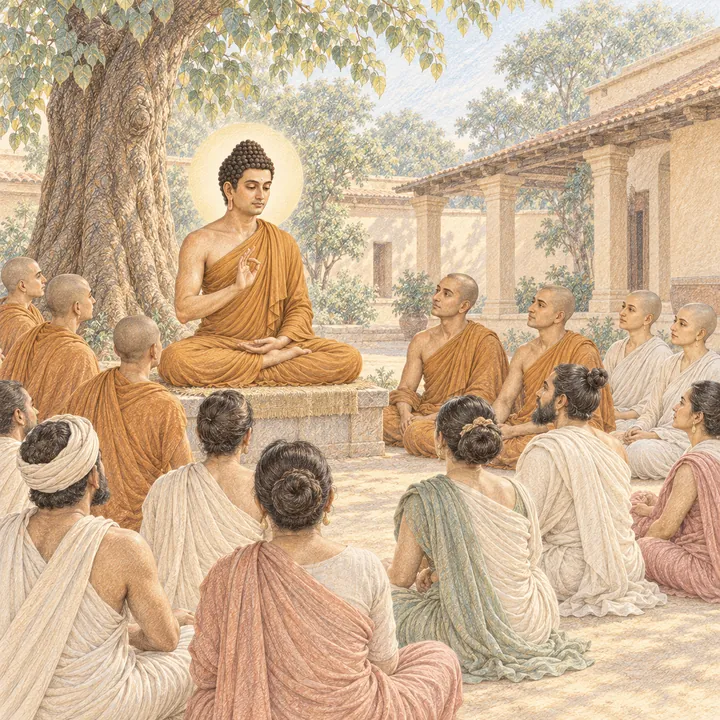
เวลาบ่าย · Afternoon
ทรงแสดงธรรมแก่ภิกษุ ภิกษุณี อุบาสก อุบาสิกา ประทานโอวาทและกรรมฐาน
Teaching the four assemblies — bhikkhus, bhikkhunīs, laymen and laywomen — with instruction and meditation subjects
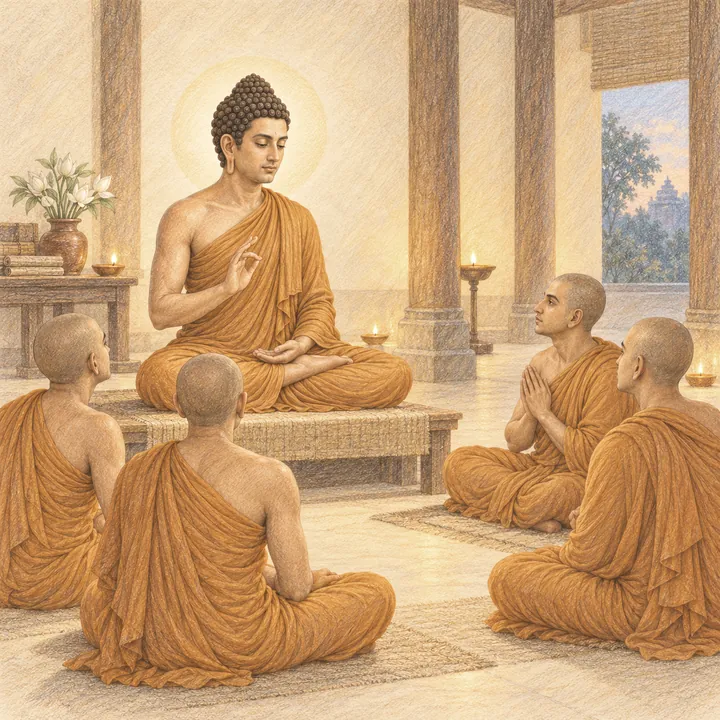
ยามต้นแห่งราตรี · First watch of the night
ประทานโอวาทแก่ภิกษุ รับการทูลถาม และแนะนำผู้มุ่งภาวนา
Advising monks, answering their questions, and guiding those set on meditation
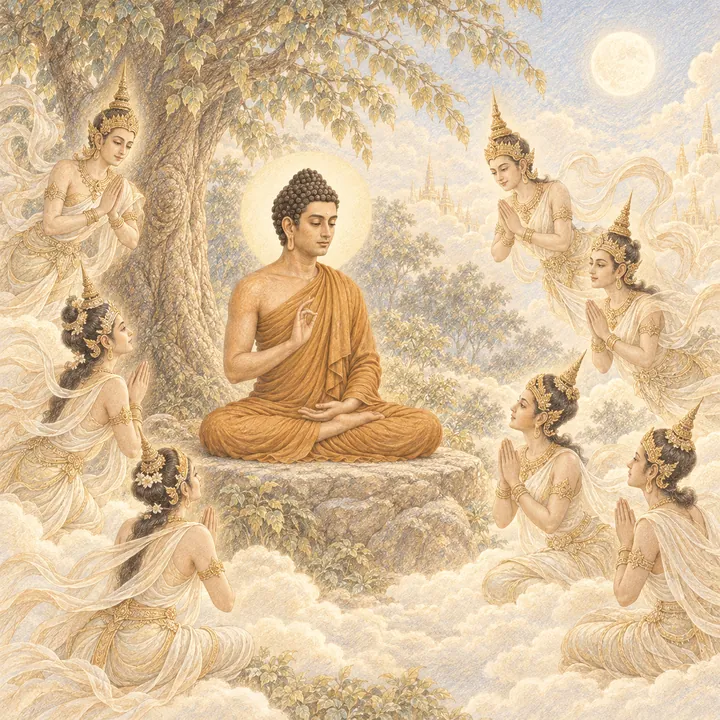
ยามกลางแห่งราตรี · Middle watch of the night
ตอบปัญหาแก่เทวดา พรหมและอมนุษย์ที่มาเข้าเฝ้า
Answering the questions of devas, brahmās and other unseen beings who came to him
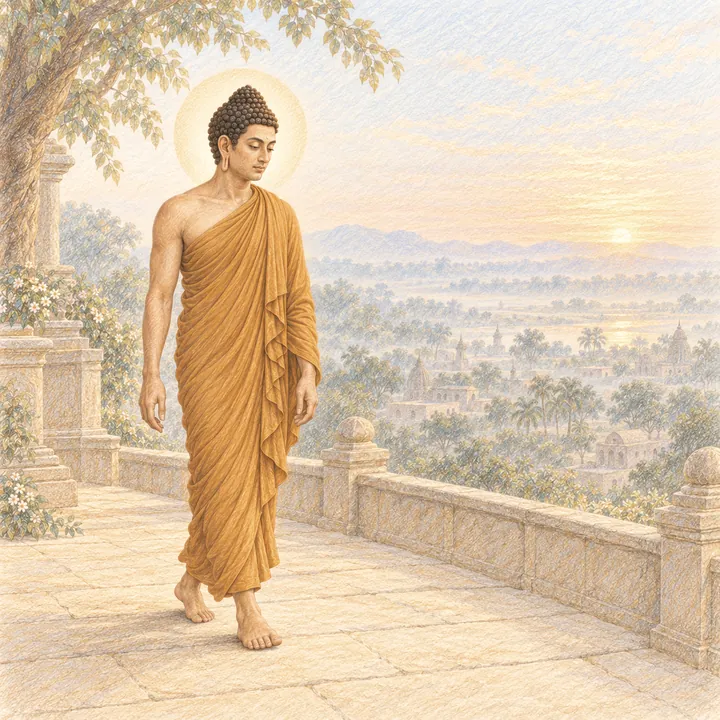
ใกล้รุ่ง · Last watch of the night
ทรงพักพระวรกาย เสด็จจงกรม และตรวจดูสัตว์โลกด้วยพระพุทธญาณ
Rest, walking meditation, and the survey of the world to see who was ready to be taught
สถานที่จำพรรษาตลอด 45 พรรษาหลังตรัสรู้ ตัวเลขในวงกลมคือพรรษาที่ประทับ ณ สถานที่นั้น
The places where the Buddha spent each rains retreat in the forty-five years after his awakening. The number in each circle is the rains spent at that place.
พรรษา 1–5 · RAINS 1–5
Paṭhamabodhikāla - The Wheel Begins to Turn
พรรษา 6–10 · RAINS 6–10
The Dhamma Reaches a Diverse World - Faith That Stands the Test
พรรษา 11–15 · RAINS 11–15
From Village and Town to the Discipline - Training That Takes Root
พรรษา 16–20 · RAINS 16–20
Compassion Turns No One Away
พรรษา 21–44 · RAINS 21–44
Sāvatthī, Centre of the Dhamma
พรรษา 45 · RAINS 45
Pacchimabodhikāla The Mahāparinibbāna
พุทธคยา (จุดเริ่มก่อนพรรษาแรก) → อิสิปตนมฤคทายวัน พาราณสี → อุรุเวลา–ราชคฤห์ → กบิลพัสดุ์–เวสาลี → มกุลบรรพต–ดาวดึงส์–สังกัสสะ → ภัคคชนบท → โกสัมพี–ป่าปาริเลยยกะ → เอกนาฬา–เวรัญชา–จาลิกา–สาวัตถี–กบิลพัสดุ์–อาฬวี–ราชคฤห์ → ช่วงประทับ ณ สาวัตถี → เวสาลี–เวฬุคาม → ภัณฑคาม–หัตถีคาม–โภคนคร–ปาวา → กุสินารา
Bodh Gayā (before the first rains) → Isipatana Deer Park, Bārāṇasī → Uruvelā–Rājagaha → Kapilavatthu–Vesālī → Mount Makula–Tāvatiṃsa–Saṅkassa → the Bhagga country → Kosambī–Pārileyyaka Forest → Ekanāḷā–Verañjā–Cālikā–Sāvatthī–Kapilavatthu–Āḷavī–Rājagaha → the settled years at Sāvatthī → Vesālī–Veḷuvagāma → Bhaṇḍagāma–Hatthigāma–Bhoganagara–Pāvā → Kusinārā
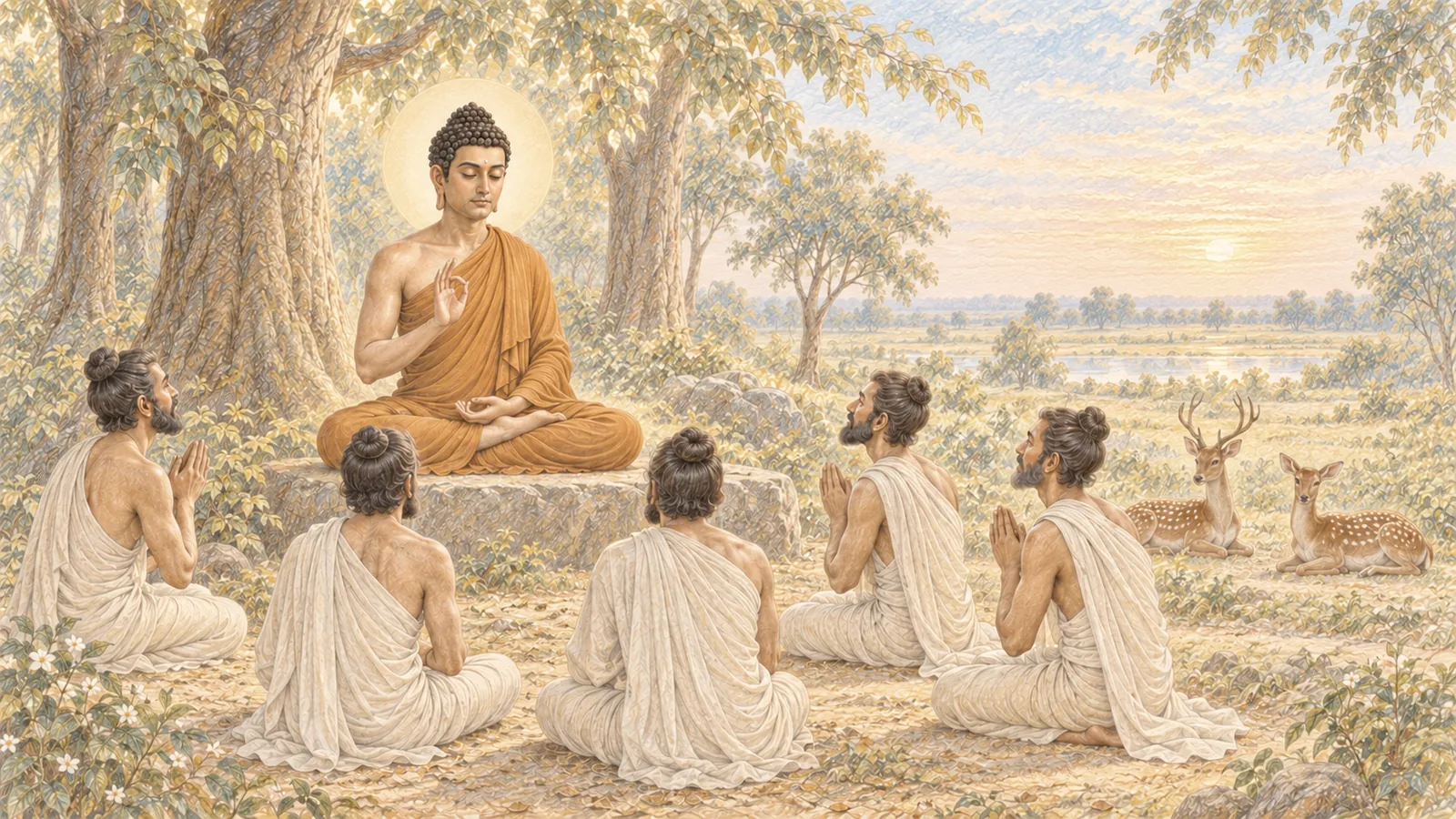
ช่วงที่ 1 · พรรษาที่ 1–5 · Rains 1–5
จากปฐมเทศนาแก่ปัญจวัคคีย์ สู่การส่งพระสาวก 60 รูป การถวายเวฬุวัน และการเกิดภิกษุณีสงฆ์ พระศาสนาเริ่มจากผู้เห็นธรรม แล้วขยายเป็นชุมชนแห่งการศึกษาและการปฏิบัติ
From the first sermon to the five ascetics, to the sending out of sixty disciples, the offering of the Veḷuvana grove and the founding of the Bhikkhunī Saṅgha: the teaching began with a handful who saw the Dhamma, and grew into a community of study and practice.
เข้าชม ปฐมโพธิกาล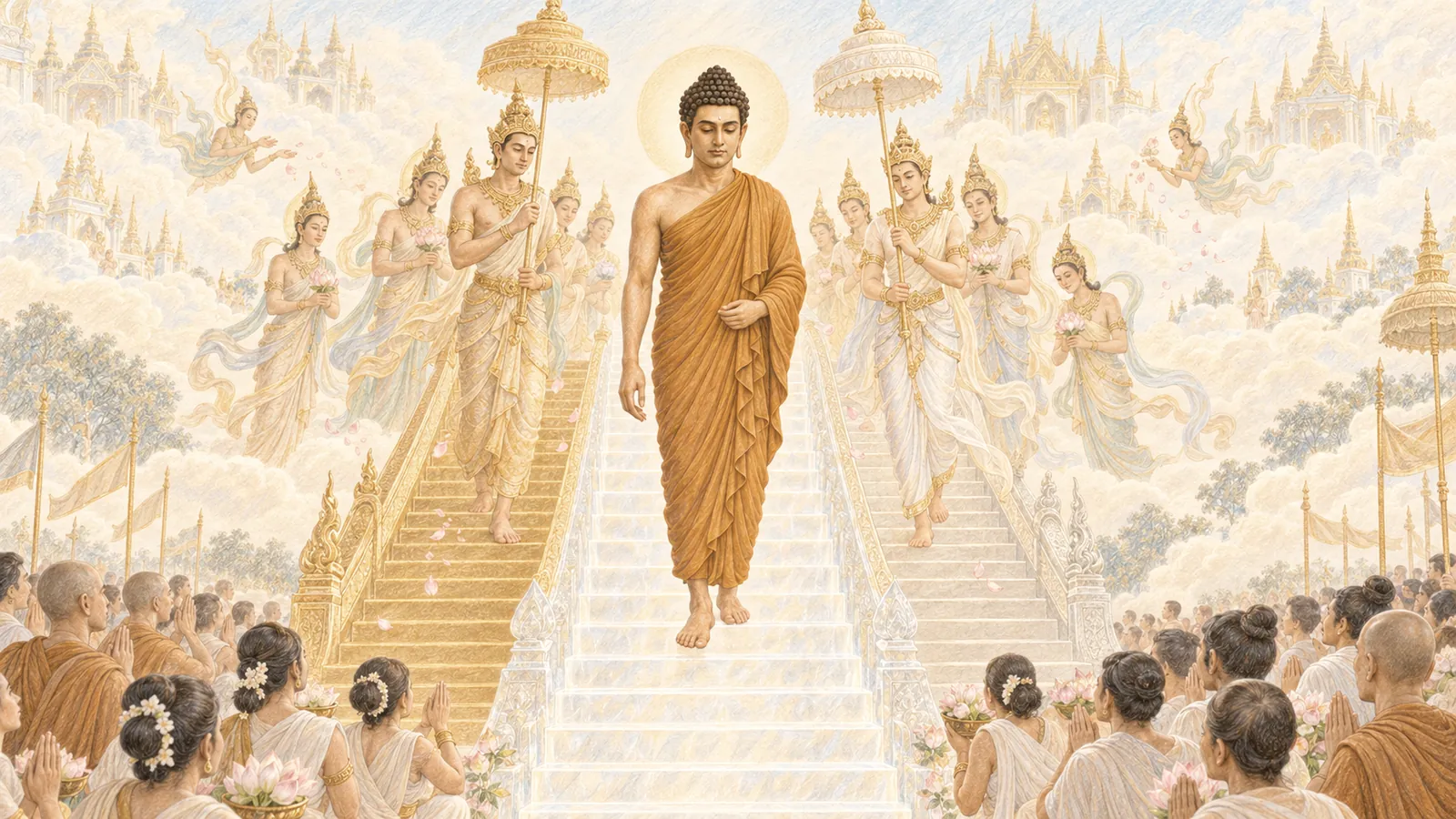
ช่วงที่ 2 · พรรษาที่ 6–10 · Rains 6–10
พระธรรมมิได้ตั้งอยู่ด้วยการอวดฤทธิ์ แต่ด้วยเหตุผลและการฝึกตน แม้เมื่อสงฆ์แตกกันที่โกสัมพี พระพุทธองค์ทรงใช้ความสงบเป็นคำสอน และป่าปาริเลยยกะกลายเป็นบทเรียนเรื่องการวางทิฏฐิ
The Dhamma does not stand on displays of power. It stands on reason and on training the mind. When the Saṅgha at Kosambī split apart, the Buddha answered with silence rather than argument, and his retreat into the Pārileyyaka Forest became a lesson in laying down one's own view.
เข้าชม ธรรมสู่สังคมหลากหลาย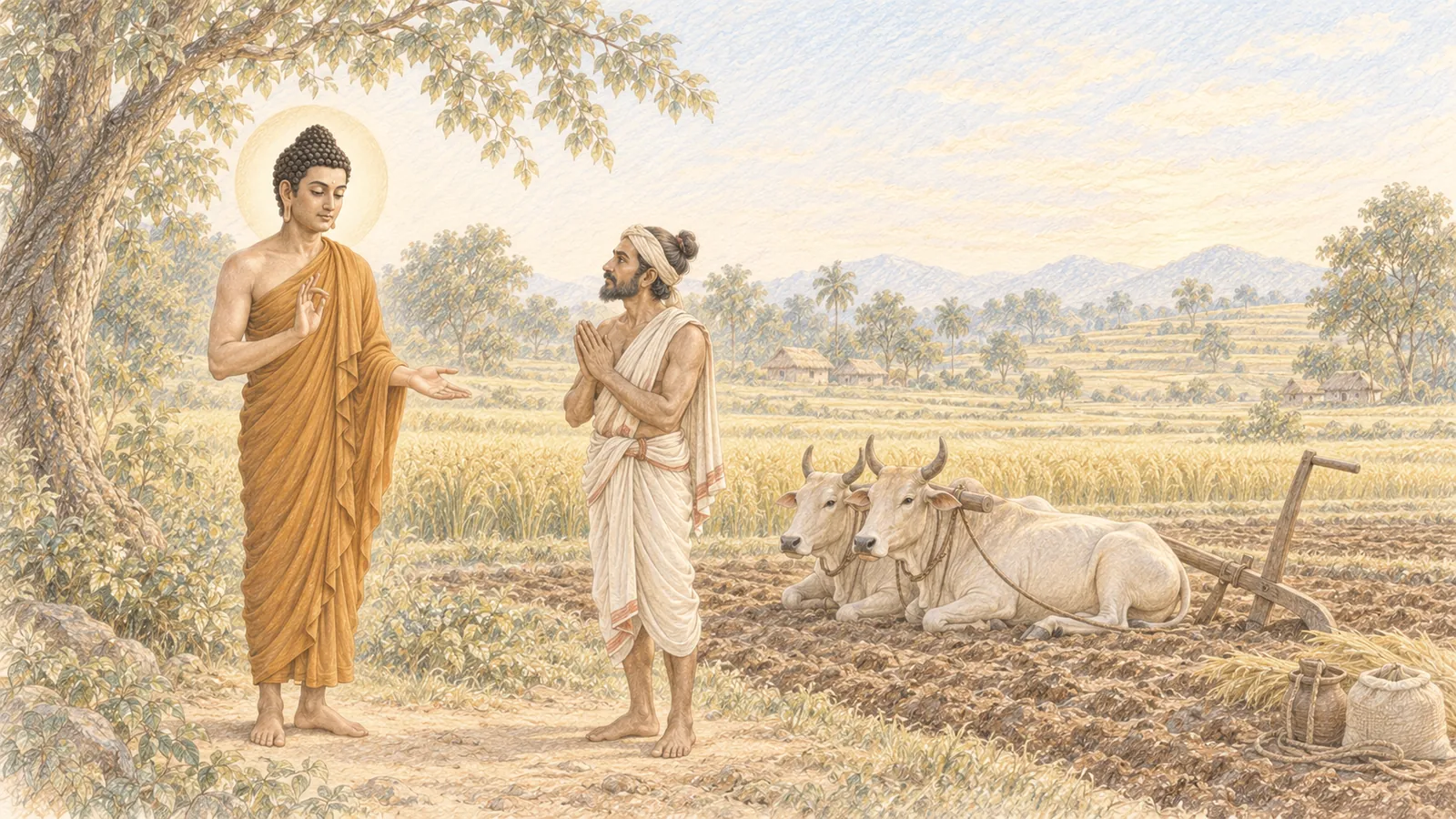
ช่วงที่ 3 · พรรษาที่ 11–15 · Rains 11–15
คำสอนถูกถ่ายทอดผ่านภาษาชีวิตจริง - การทำนา ความหิว ความดื้อของผู้ปฏิบัติ และการอบรมเยาวชน พระวินัยค่อยๆ เกิดจากเหตุการณ์ เพื่อคุ้มครองทั้งบุคคลและความมั่นคงของสงฆ์
The teaching was carried in the language of ordinary life — ploughing a field, going hungry, the stubbornness of a practitioner, the training of the young. The Discipline grew case by case out of what actually happened, to protect both the individual and the stability of the Saṅgha.
เข้าชม จากคามนิคมสู่ธรรมวินัย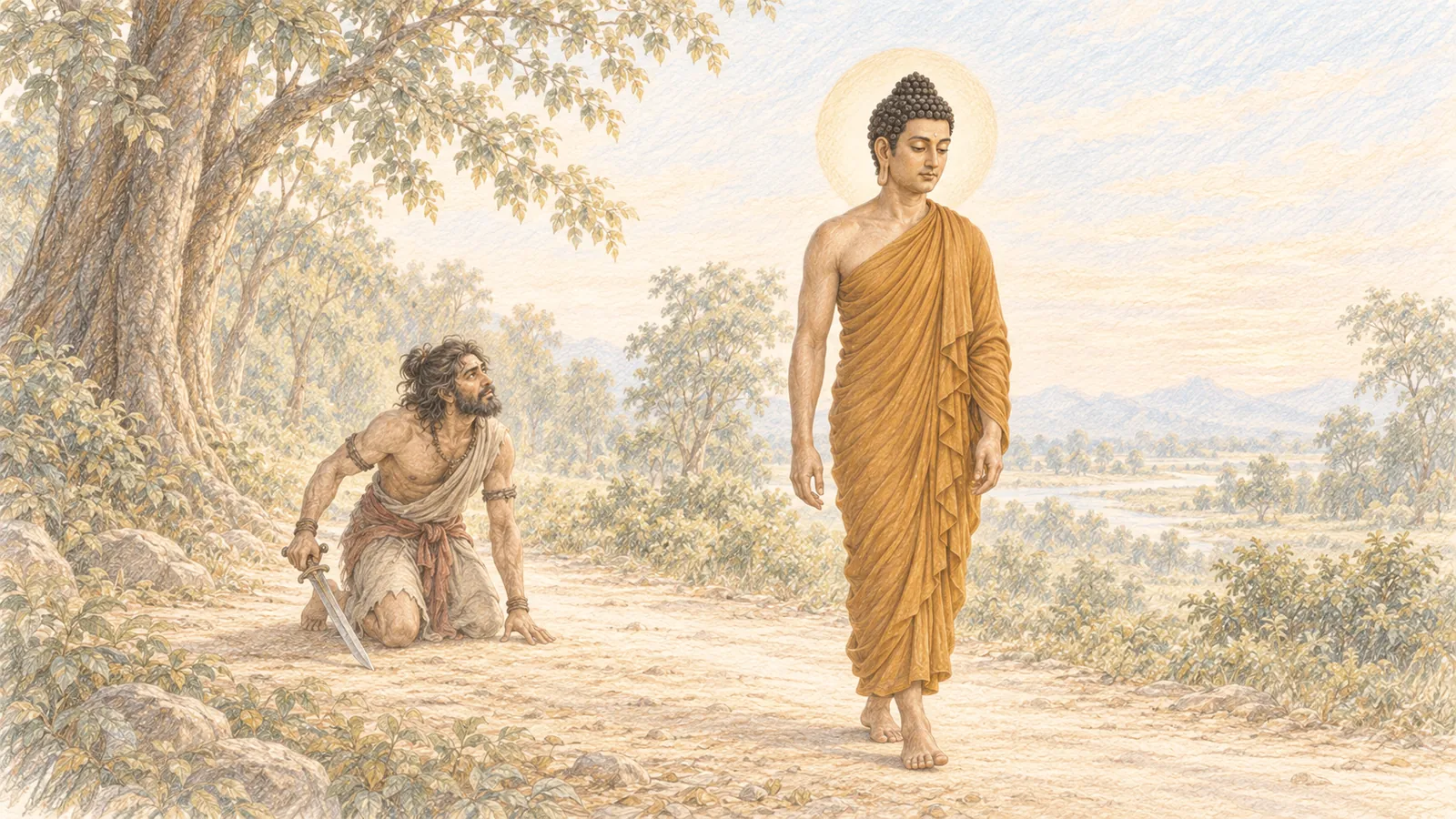
ช่วงที่ 4 · พรรษาที่ 16–20 · Rains 16–20
ผู้ดุร้าย ผู้หลงผิด หรือผู้ถูกสังคมทอดทิ้ง มิได้ถูกปิดประตูจากธรรม เมื่อมีเหตุแห่งการตื่นรู้ พระกรุณาย่อมเปลี่ยนความกลัวเป็นศรัทธา และเปลี่ยนอดีตอันรุนแรงเป็นชีวิตแห่งความไม่เบียดเบียน
The violent, the deluded and the outcast were never shut out from the Dhamma. Where the conditions for awakening were present, compassion turned fear into faith, and turned a past built on violence into a life of harming no one.
เข้าชม พระกรุณาไม่เลือกผู้ควรโปรด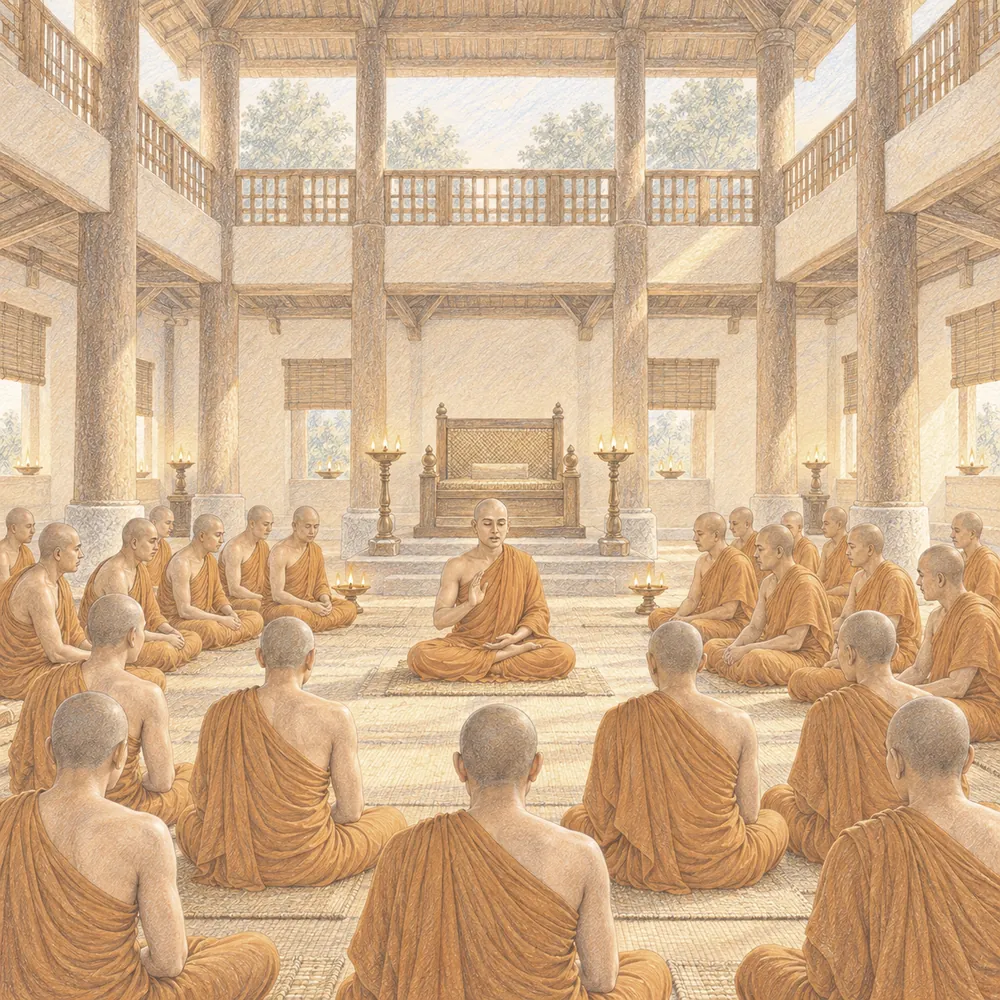
ช่วงที่ 5 · พรรษาที่ 21–44 · Rains 21–44
ยี่สิบพรรษาแรกทรงจาริกไม่หยุด แต่พรรษาที่ 21 ถึง 44 ทรงประทับที่สาวัตถี สลับสองอาราม ยี่สิบสี่พรรษานี้มิใช่การหยุดพัก แต่คือการวางระบบให้พระศาสนายืนอยู่ได้เอง แม้เมื่อพระศาสดาไม่อยู่แล้ว
For twenty years the Buddha travelled without pause. From the twenty-first rains to the forty-fourth he settled at Sāvatthī, moving between two monasteries. These years were not retirement. They were the building of a community able to stand alone.
เข้าชม สาวัตถี ศูนย์กลางพระธรรม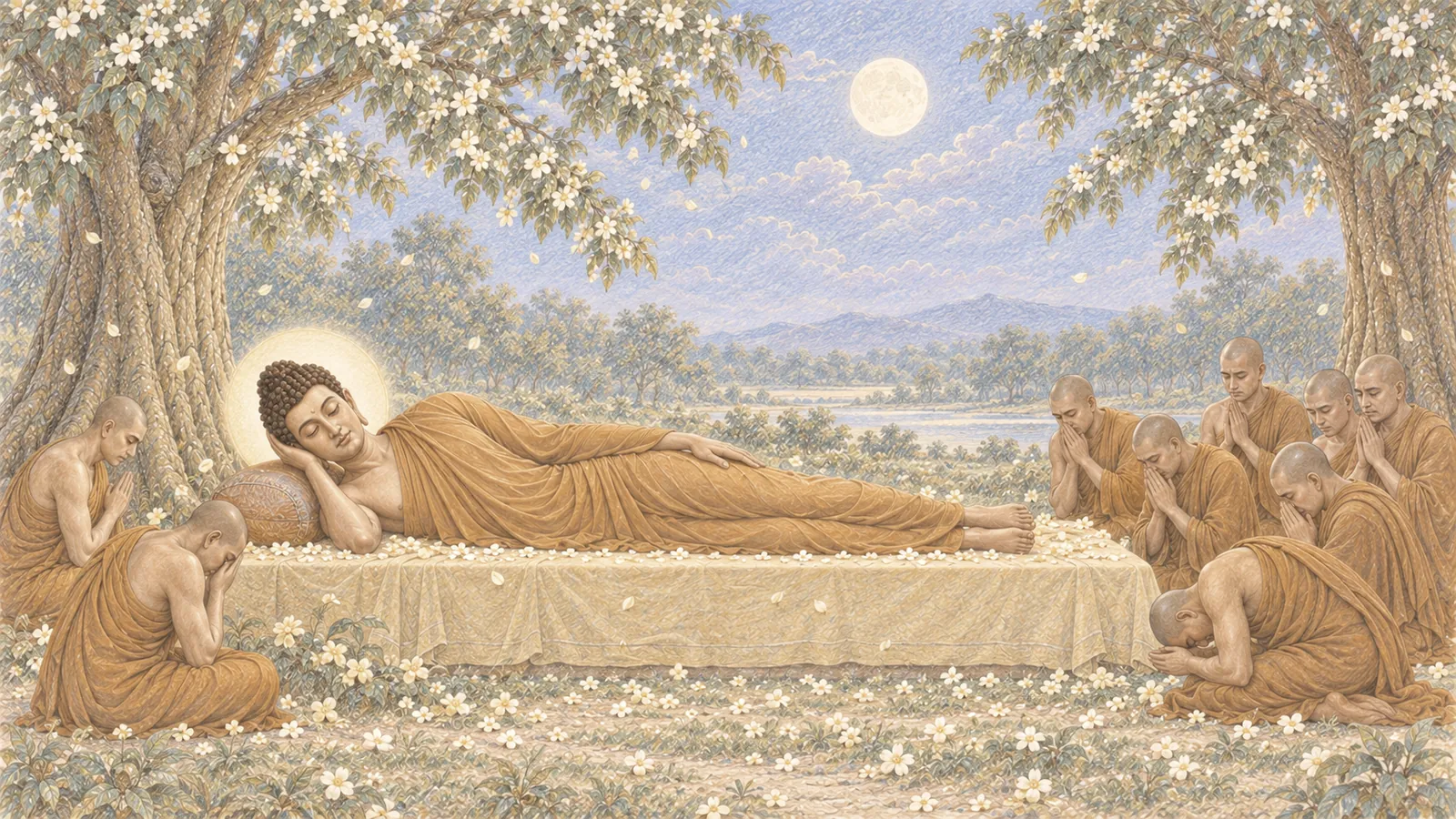
ช่วงที่ 6 · พรรษาที่ 45 · Rains 45
เมื่อพระชนมชีพเข้าสู่วาระปลาย พระธรรมเทศนายิ่งเน้นชรา มรณะ การพึ่งตน และการรักษาธรรมวินัย การจาริกครั้งสุดท้ายจบลงที่กุสินารา แต่คำสอนเรื่องความไม่ประมาทยังเปิดทางให้คนรุ่นหลังเดินต่อ
As his life drew toward its close, the teaching turned more and more to ageing, to death, to standing on one’s own, and to keeping the Dhamma and the Discipline intact. His last journey ended at Kusinārā - but the instruction on heedfulness left the road open for everyone who came after.
เข้าชม ปัจฉิมโพธิกาลผนังยาว 15.77 เมตร สูง 2.24 เมตร แบ่งเป็น 7 ช่วง เดินชมจากซ้ายไปขวา ตั้งแต่ปฐมบทจนถึงมหาปรินิพพาน เลื่อนภาพไปทางขวาเพื่อชมผนังทั้งแนว
The wall is 15.77 metres long and 2.24 metres high, in seven sections read from left to right, from the prologue to the Mahāparinibbāna. Scroll the image sideways to see the whole wall.

 ปฐมบท
 พรรษา 1–5
 พรรษา 6–10
 พรรษา 11–15
 พรรษา 16–20
 พรรษา 21–44
 พรรษา 45