
ช่วงที่ 5 · พรรษาที่ 21–44 · Rains 21–44
สาวัตถี ศูนย์กลางพระธรรม
Sāvatthī, Centre of the Dhamma
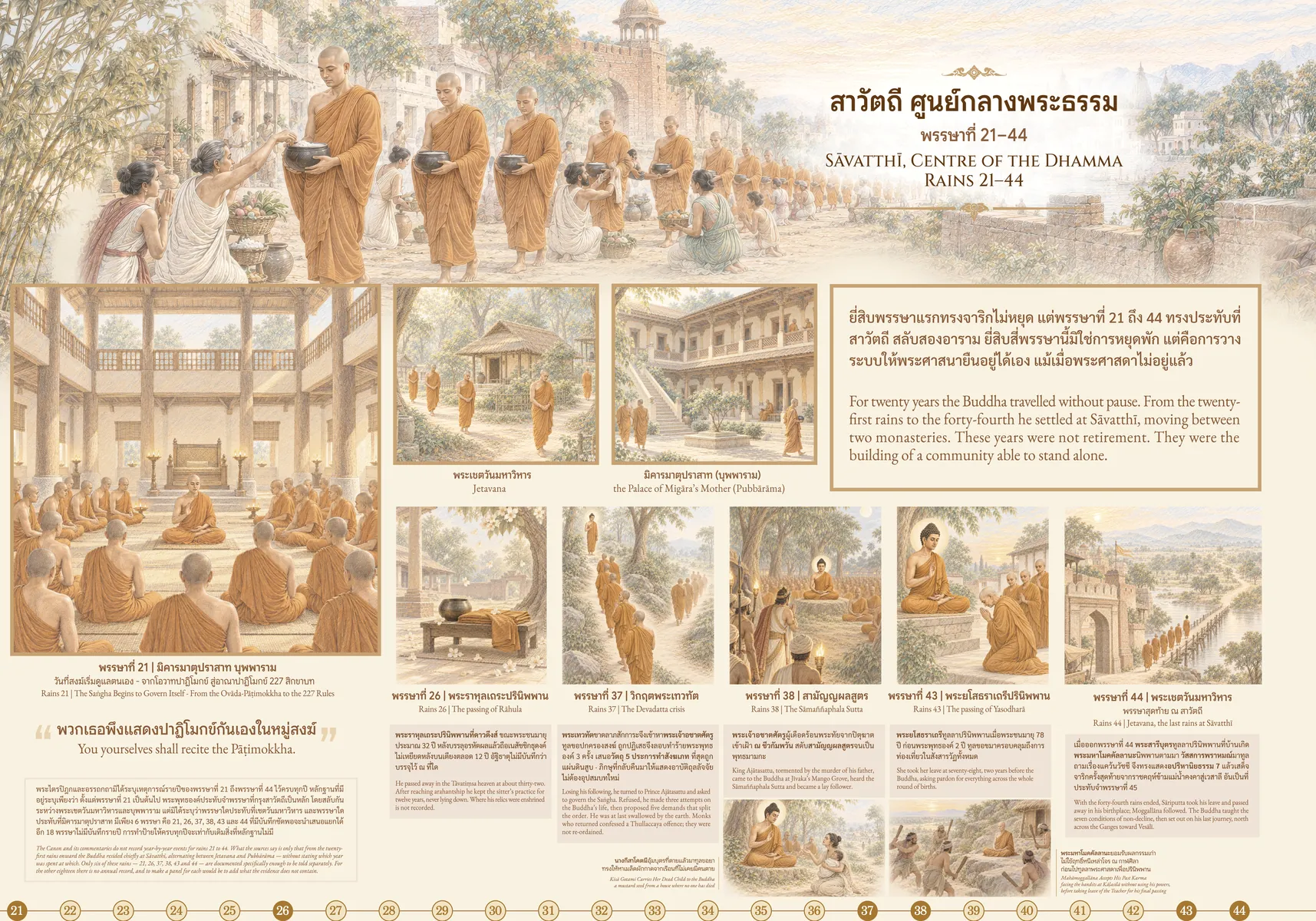
ยี่สิบพรรษาแรกทรงจาริกไม่หยุด แต่พรรษาที่ 21 ถึง 44 ทรงประทับที่สาวัตถี สลับสองอาราม ยี่สิบสี่พรรษานี้มิใช่การหยุดพัก แต่คือการวางระบบให้พระศาสนายืนอยู่ได้เอง แม้เมื่อพระศาสดาไม่อยู่แล้ว
For twenty years the Buddha travelled without pause. From the twenty-first rains to the forty-fourth he settled at Sāvatthī, moving between two monasteries. These years were not retirement. They were the building of a community able to stand alone.
วีดิทัศน์และเสียงบรรยายของช่วงนี้อยู่ที่หน้าปกเสียงบรรยายช่วงนี้ยาว 6:31 นาที · ในวีดิทัศน์เริ่มนาทีที่ 19:45Narration 6:31 min · begins at 19:45 in the video · ไปที่หน้าปก
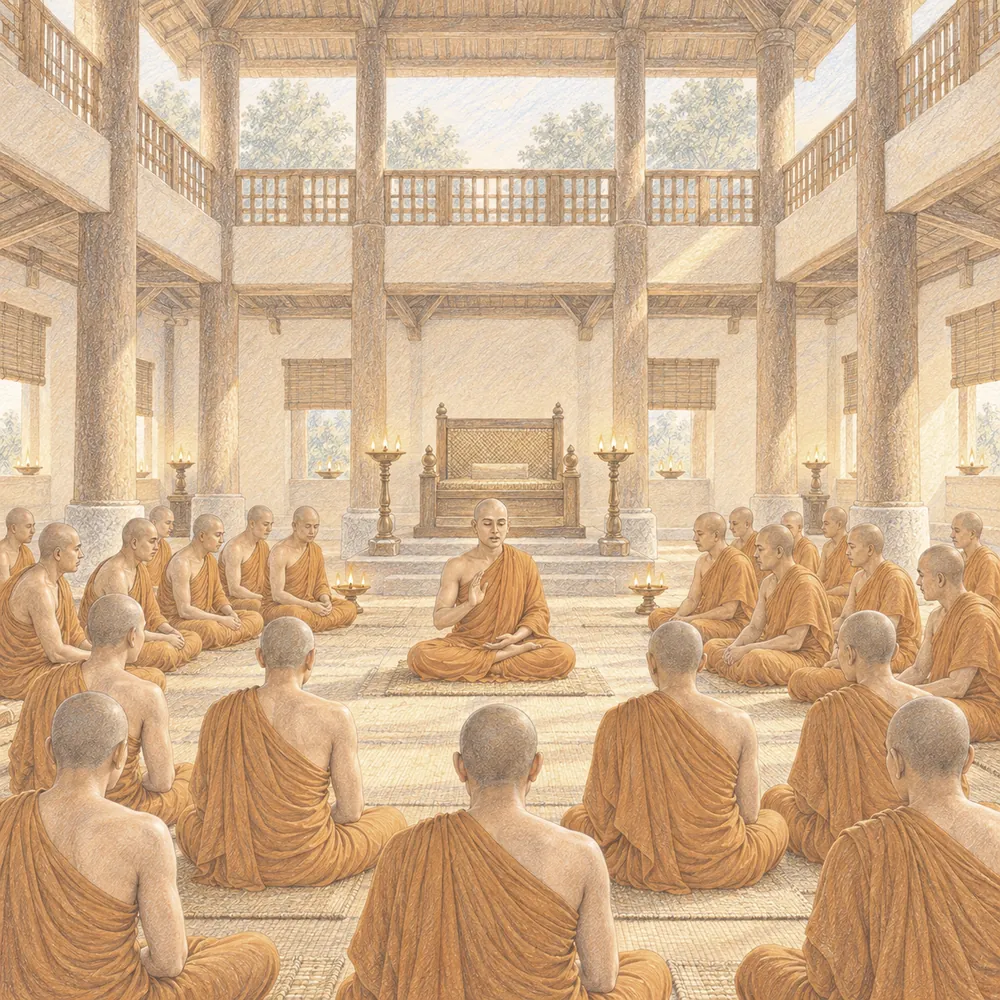
พรรษาที่ 21 · Rains 21
วันที่สงฆ์เริ่มดูแลตนเอง - จากโอวาทปาฏิโมกข์ สู่อาณาปาฏิโมกข์ 227 สิกขาบท
The Saṅgha Begins to Govern Itself - From the Ovāda-Pāṭimokkha to the 227 Rules
พุทธพจน์ · พระดำรัสในพรรษาที่ 21
พวกเธอพึงแสดงปาฏิโมกข์กันเองในหมู่สงฆ์
You yourselves shall recite the Pāṭimokkha.
วิ.มหา.; ขุ.อุ. [สุริย์, น.188] — พระดำรัสในพรรษาที่ 21 ณ มิคารมาตุปราสาทพระไตรปิฎกและอรรถกถามิได้ระบุเหตุการณ์รายปีของพรรษาที่ 21 ถึงพรรษาที่ 44 ไว้ครบทุกปี หลักฐานที่มีอยู่ระบุเพียงว่า ตั้งแต่พรรษาที่ 21 เป็นต้นไป พระพุทธองค์ประทับจำพรรษาที่กรุงสาวัตถีเป็นหลัก โดยสลับกันระหว่างพระเชตวันมหาวิหารและบุพพาราม แต่มิได้ระบุว่าพรรษาใดประทับที่เชตวันมหาวิหาร และพรรษาใดประทับที่มิคารมาตุปราสาท มีเพียง 6 พรรษา คือ 21, 26, 37, 38, 43 และ 44 ที่มีบันทึกชัดพอจะนำเสนอแยกได้ อีก 18 พรรษาไม่มีบันทึกรายปี การทำป้ายให้ครบทุกปีจะเท่ากับเติมสิ่งที่หลักฐานไม่มี
The Canon and its commentaries do not record year-by-year events for rains 21 to 44. What the sources say is only that from the twenty-first rains onward the Buddha resided chiefly at Sāvatthī, alternating between Jetavana and Pubbārāma — without stating which year was spent at which. Only six of these rains — 21, 26, 37, 38, 43 and 44 — are documented specifically enough to be told separately. For the other eighteen there is no annual record, and to make a panel for each would be to add what the evidence does not contain.
วงกลมทึบ = พรรษาที่มีบันทึก (กดเพื่ออ่าน) · วงกลมว่าง = ไม่มีบันทึกรายปี
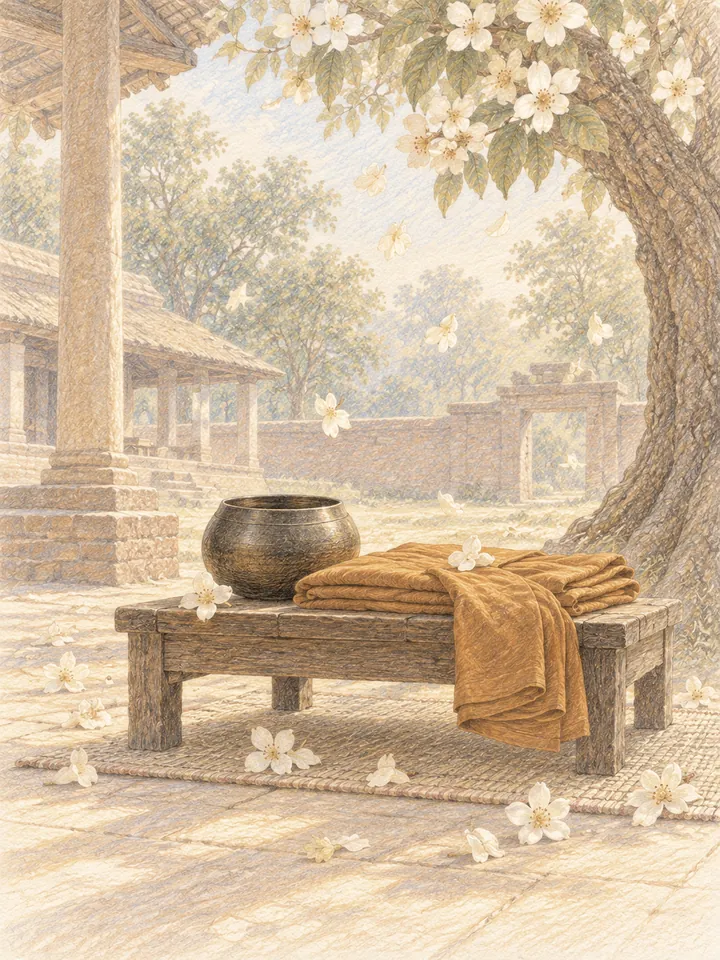
พรรษาที่ 26 · Rains 26
พระราหุลเถระปรินิพพานที่ดาวดึงส์ ขณะพระชนมายุประมาณ 32 ปี หลังบรรลุอรหัตผลแล้วถือเนสัชชิกธุดงค์ ไม่เหยียดหลังบนเตียงตลอด 12 ปี อัฐิธาตุไม่มีบันทึกว่าบรรจุไว้ ณ ที่ใด
He passed away in the Tāvatiṃsa heaven at about thirty-two. After reaching arahantship he kept the sitter’s practice for twelve years, never lying down. Where his relics were enshrined is not recorded.
ระดับหลักฐาน C (ปี) [สุริย์, น.189–190]
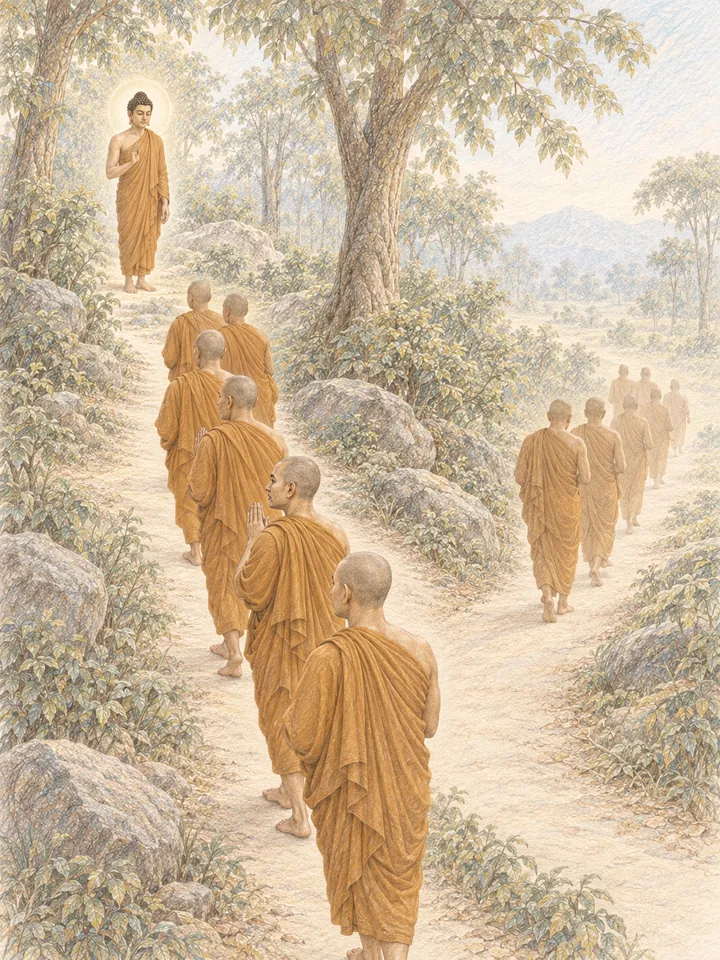
พรรษาที่ 37 · Rains 37
พระเทวทัตขาดลาภสักการะจึงเข้าหาพระเจ้าอชาตศัตรู ทูลขอปกครองสงฆ์ ถูกปฏิเสธจึงลอบทำร้ายพระพุทธองค์ 3 ครั้ง เสนอวัตถุ 5 ประการทำสังฆเภท ที่สุดถูกแผ่นดินสูบ · ภิกษุที่กลับคืนมาให้แสดงอาบัติถุลลัจจัย ไม่ต้องอุปสมบทใหม่
Losing his following, he turned to Prince Ajātasattu and asked to govern the Saṅgha. Refused, he made three attempts on the Buddha’s life, then proposed five demands that split the order. He was at last swallowed by the earth. Monks who returned confessed a Thullaccaya offence; they were not re-ordained.
ระดับหลักฐาน A (เหตุการณ์) / C (ปี) [สุริย์, น.190–194]
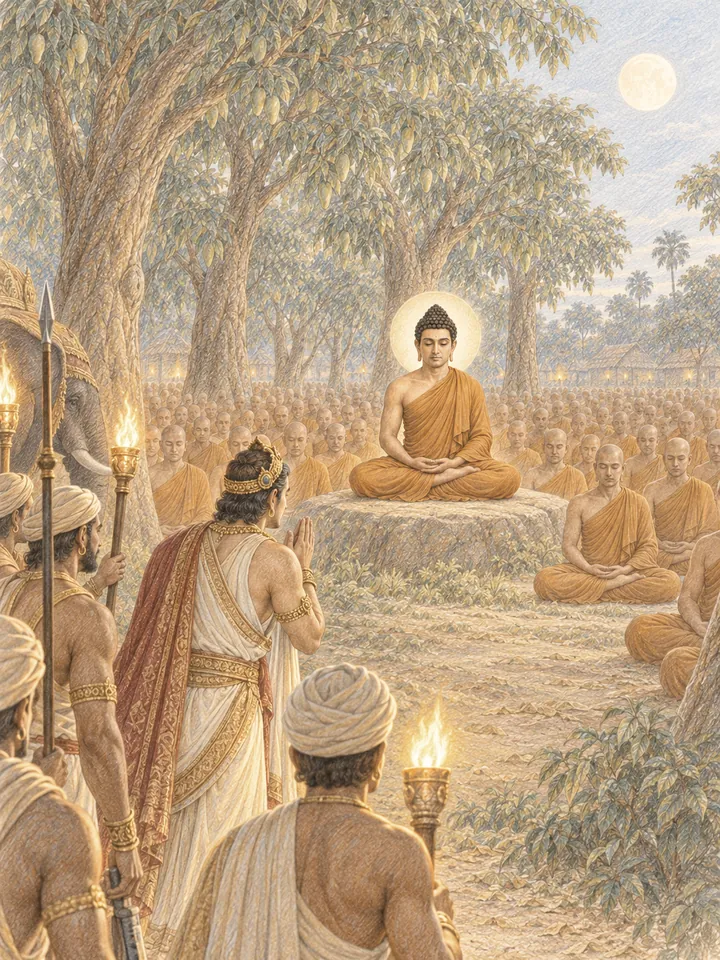
พรรษาที่ 38 · Rains 38
พระเจ้าอชาตศัตรูผู้เดือดร้อนพระทัยจากปิตุฆาต เข้าเฝ้า ณ ชีวกัมพวัน สดับสามัญญผลสูตรจนเป็นพุทธมามกะ
King Ajātasattu, tormented by the murder of his father, came to the Buddha at Jīvaka’s Mango Grove, heard the Sāmaññaphala Sutta and became a lay follower.
ระดับหลักฐาน A (เหตุการณ์) / C (ปี) [สุริย์, น.194–196]
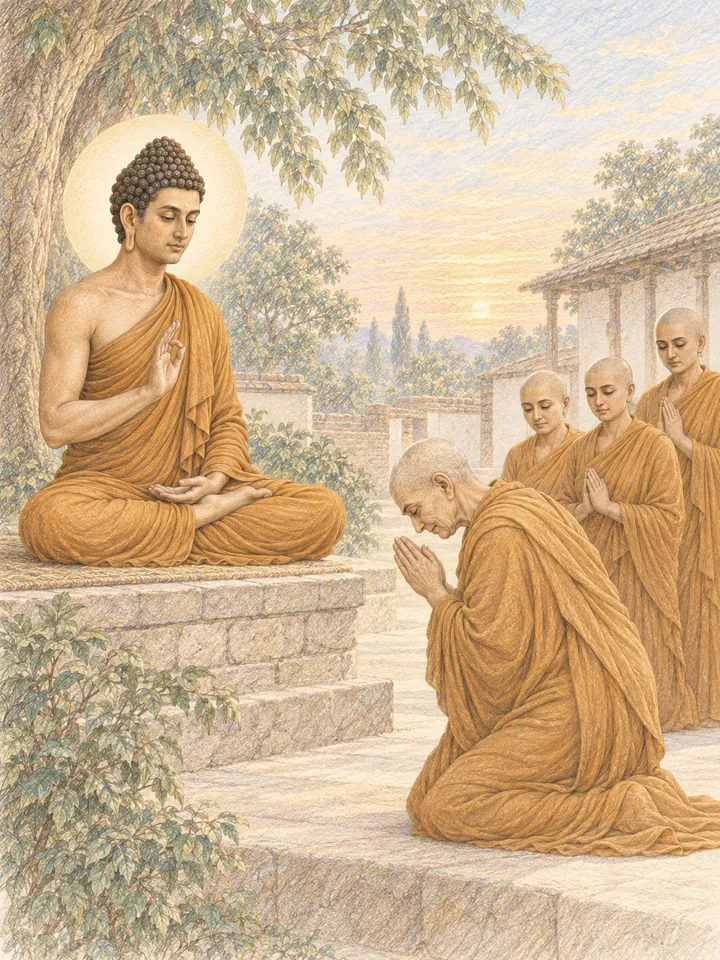
พรรษาที่ 43 · Rains 43
พระยโสธราเถรีทูลลาปรินิพพานเมื่อพระชนมายุ 78 ปี ก่อนพระพุทธองค์ 2 ปี ทูลขอขมาครอบคลุมถึงการท่องเที่ยวในสังสารวัฏทั้งหมด
She took her leave at seventy-eight, two years before the Buddha, asking pardon for everything across the whole round of births.
ระดับหลักฐาน C (ปี) [ขุ.อป. 168 ยโสธราเถรีอปทาน; สุริย์, น.197]
พรรษาที่ 44 · Rains 44
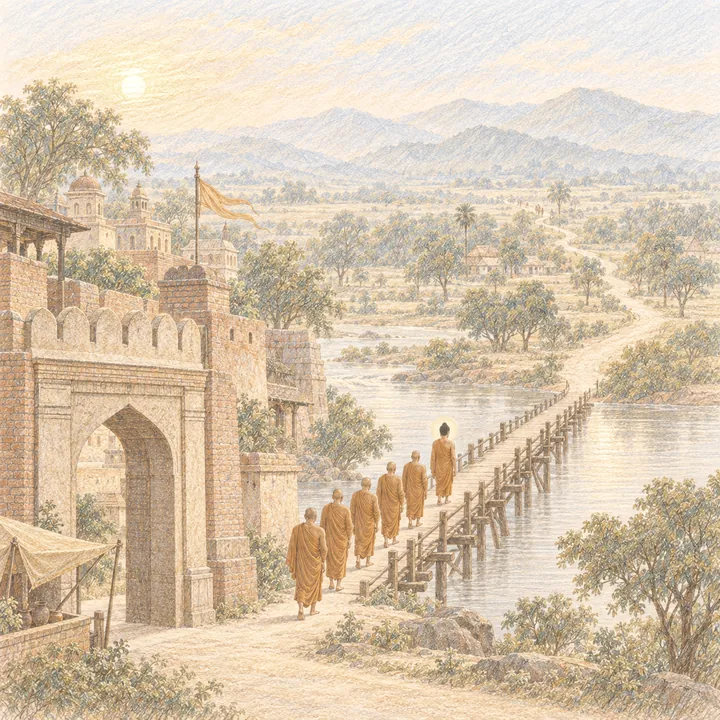
พรรษาสุดท้าย ณ สาวัตถี
เมื่อออกพรรษาที่ 44 พระสารีบุตรทูลลาปรินิพพานที่บ้านเกิด พระมหาโมคคัลลานะนิพพานตามมา วัสสการพราหมณ์มาทูลถามเรื่องแคว้นวัชชี จึงทรงแสดงอปริหานิยธรรม 7 แล้วเสด็จจาริกครั้งสุดท้ายจากราชคฤห์ข้ามแม่น้ำคงคาสู่เวสาลี อันเป็นที่ประทับจำพรรษาที่ 45
With the forty-fourth rains ended, Sāriputta took his leave and passed away in his birthplace; Moggallāna followed. The Buddha taught the seven conditions of non-decline, then set out on his last journey, north across the Ganges toward Vesālī.
ระดับหลักฐาน ตามแหล่ง [สุริย์; ที.มหา.]
ตัวเลขคือพรรษาที่เกี่ยวข้อง
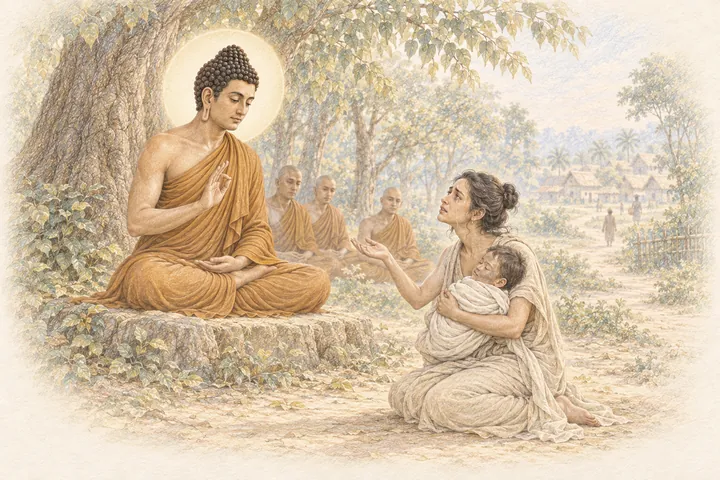
ทรงให้หาเมล็ดผักกาดจากเรือนที่ไม่เคยมีคนตาย
a mustard seed from a house where no one has died
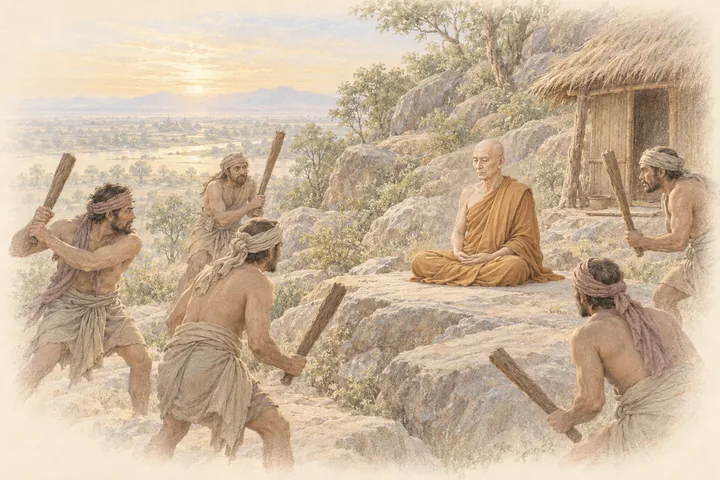
ไม่ใช้ฤทธิ์หนีเหล่าโจร ณ กาฬศิลา ก่อนไปทูลลาพระศาสดาเพื่อปรินิพพาน
facing the bandits at Kāḷasilā without using his powers, before taking leave of the Teacher for his final passing
หนังสือประมวลเหตุผลไว้ 5 ประการ หนึ่ง สาวัตถีเป็นเมืองสงบสุข มั่งคั่ง ภิกษาหารอุดมสมบูรณ์ สอง มีไพรสณฑ์เหมาะแก่การบำเพ็ญสมณธรรม ใกล้พอจะบิณฑบาต แต่สงัดพอจะภาวนา สาม พระเจ้าปเสนทิโกศลทรงเลื่อมใสอย่างเปิดเผย สี่ มีตระกูลอนาถบิณฑิกเศรษฐีและตระกูลวิสาขาที่จัดอาสนะรับภิกษุแห่งละสองพันรูปทุกวัน ห้า สาวัตถีจึงกลายเป็นแหล่งกำเนิดพระวินัย เพราะการบัญญัติสิกขาบทส่วนใหญ่เกิดขึ้นที่นี่ [สุริย์, น.167–168]
The sources give five reasons. Sāvatthī was peaceful and prosperous, with abundant alms food. Its groves suited meditation, near enough for the alms round yet quiet enough for practice. King Pasenadi was openly devoted. Two households, Anāthapiṇḍika's and Visākhā's, each set out seats for two thousand monks daily. And most of the monastic rules were laid down here.
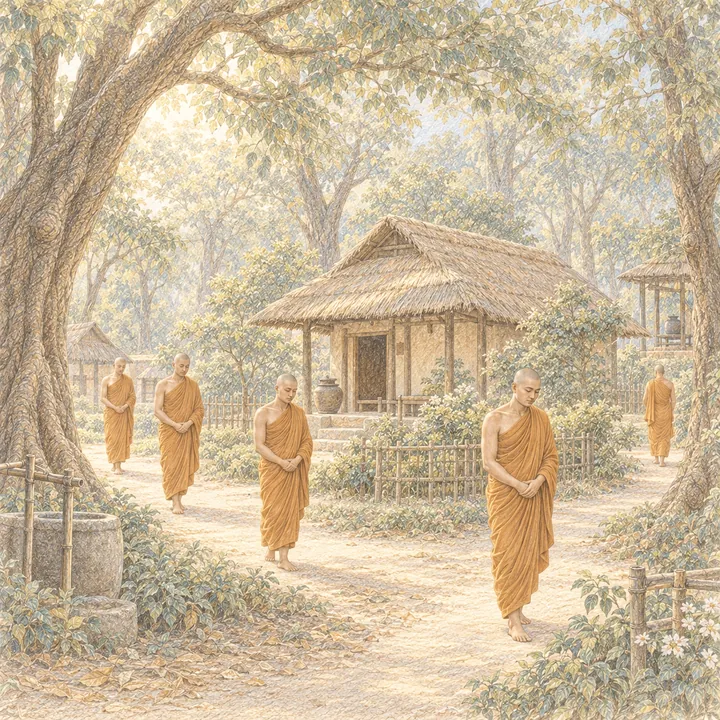
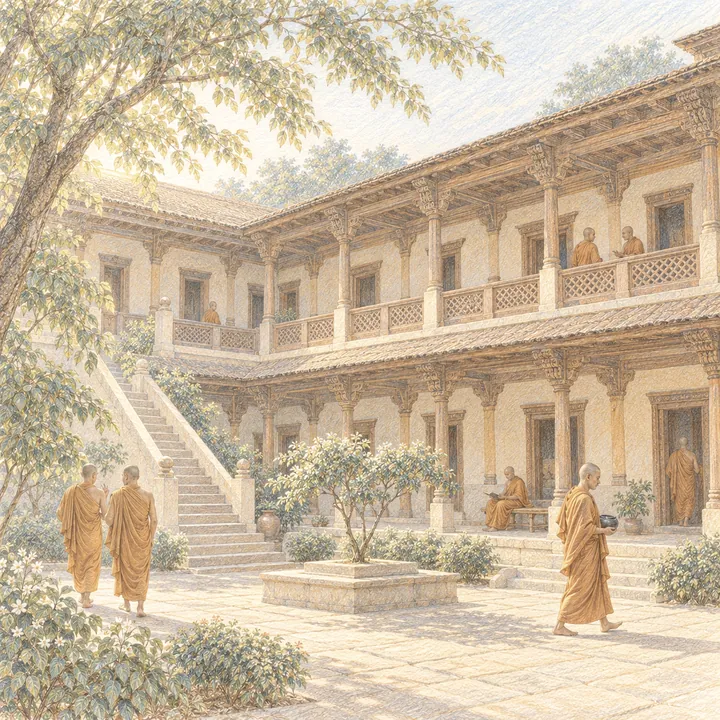
พระเชตวันอยู่ทิศใต้ของเมือง เกิดจากศรัทธาของ อนาถบิณฑิกเศรษฐี ผู้ปูกหาปณะ 18 โกฏิซื้อที่ดินของเจ้าเชต และบริจาคเพื่อพระศาสนารวม 54 โกฏิ บุพพารามอยู่ทิศตะวันออก เกิดจากศรัทธาของ นางวิสาขา ผู้ขายเครื่องประดับมหาลดาปสาธน์แล้วนำเงินมาสร้างปราสาท 2 ชั้น ชั้นละ 500 ห้อง รวมค่าใช้จ่าย 27 โกฏิ พระพุทธองค์ประทับสลับสองแห่ง ค้างคืนที่ใด รุ่งเช้าบิณฑบาตกลางเมืองแล้วไปพักกลางวันที่อีกแห่งหนึ่ง [สุริย์, น.167, 172–173, 185–186]
Jetavana stood south of the city, built by the merchant Anāthapiṇḍika, who paid eighteen crores of coins to cover the ground he bought from Prince Jeta, and gave fifty-four crores in all. Pubbārāma stood to the east, built by Visākhā from the sale of her great jewelled ornament: a two-storey palace of five hundred rooms on each floor. The Buddha alternated between them, walking through the city each morning for alms.
| เรื่อง | ใจความ | Summary | ที่มา |
|---|---|---|---|
| พร 8 ประการของนางวิสาขาVisākhā's Eight Boons | ทูลขอสิทธิ์ที่จะ "ให้" ทั้ง 8 ข้อ ไม่มีข้อใดขอเพื่อตนเอง เป็นต้นบัญญัติการถวายผ้าอาบน้ำฝนที่ชาวพุทธถือปฏิบัติมาถึงปัจจุบัน | All eight boons she asked for were rights to give, not to receive. From them comes the offering of rains-bathing cloth that Buddhists keep to this day. | สุริย์, น.184–185 |
| "บิดาของสามีกำลังบริโภคของเก่า""My husband's father is eating what is already spent" | คำพูดที่ทำให้มิคารเศรษฐีได้ฟังธรรมและบรรลุโสดาปัตติผล แล้วยกนางวิสาขาเป็นมารดา จึงได้นาม "วิสาขามิคารมาตา" | The remark that led Migāra to hear the Dhamma and reach stream-entry. He then honoured Visākhā as his mother, giving her the name Visākhā Migāramātā. | สุริย์, น.183 |
| อนาถปิณฑิโกวาทสูตรAnāthapiṇḍikovāda Sutta | พระสารีบุตรแสดงธรรมแก่ท่านเศรษฐีในวาระสุดท้าย ท่านร้องไห้เพราะเสียดายที่ไม่เคยได้ฟังธรรมลึกซึ้งด้วยถ้อยคำเข้าใจง่ายเช่นนี้มาก่อน | Sāriputta taught the dying merchant, who wept — not from pain, but because in all those years no one had put so deep a teaching in words so plain. | สุริย์, น.178–179 |
| เอตทัคคะForemost among lay disciples | อนาถบิณฑิกเศรษฐี เลิศกว่าอุบาสกผู้ถวายทาน · นางวิสาขา เลิศกว่าอุบาสิกาผู้ถวายทาน | Anāthapiṇḍika, foremost among laymen who give; Visākhā, foremost among laywomen who give. | สุริย์, น.179, 187 |
ณ มิคารมาตุปราสาท พระพุทธองค์ทรงเลิกแสดงปาฏิโมกข์ด้วยพระองค์เอง แล้วมอบให้สงฆ์ทำอุโบสถและแสดงปาฏิโมกข์กันเองทุกกึ่งเดือน เหตุผลที่ทรงยกมิใช่ความชรา แต่เป็นหลักการว่า มิใช่ฐานะที่ตถาคตจะแสดงปาฏิโมกข์ในบริษัทผู้ไม่บริสุทธิ์ นับแต่นั้นสงฆ์แสดง อาณาปาฏิโมกข์ 227 สิกขาบท สืบมาจนปัจจุบัน นี่คือการเปลี่ยนจากการพึ่งพาบุคคล มาสู่การพึ่งพากติกาที่หมู่คณะรักษาร่วมกัน และเป็นรากฐานที่ทำให้พระศาสนาดำรงอยู่ได้แม้เมื่อพระศาสดาปรินิพพานแล้ว [วิ.มหา.; ขุ.อุ.; สุริย์, น.188]
At the Palace of Migāra's Mother the Buddha ceased reciting the Pāṭimokkha himself and gave the task to the Saṅgha, to be done together every fortnight. His reason was not age but principle: a Tathāgata does not recite it before an impure assembly. From then the Saṅgha recited the 227 training rules on its own, as it still does. Authority passed from a person to a shared code, and the teaching gained the means to outlive its teacher.
| หัวข้อ | ไทย | English |
|---|---|---|
| โอวาทปาฏิโมกข์Ovāda-Pāṭimokkha | พระโอวาท 3 คาถากึ่ง ทรงแสดงเองครั้งแรกวันจาตุรงคสันนิบาตแก่พระอรหันต์ 1,250 รูป และทรงแสดงเรื่อยมาจนถึงพรรษาที่ 20 | Three and a half verses of exhortation, first given by the Buddha himself at the Great Assembly before 1,250 arahants, and repeated by him until the twentieth rains |
| อาบัติ 7 กองThe seven classes of offence | ปาราชิก สังฆาทิเสส ถุลลัจจัย ปาจิตตีย์ ปาฏิเทสนียะ ทุกกฏ ทุพภาสิต แบ่งเป็นครุกาบัติและลหุกาบัติ | Pārājika, Saṅghādisesa, Thullaccaya, Pācittiya, Pāṭidesanīya, Dukkaṭa and Dubbhāsita — divided into grave and light offences |
| อุโบสถ 3 ประเภทThree forms of the Uposatha | สังฆอุโบสถ (4 รูปขึ้นไป) · ปาริสุทธิอุโบสถ (2–3 รูป) · ปุคคลอุโบสถ (รูปเดียว) | By the assembly (four monks or more), by declaration of purity (two or three), and alone (a single monk) |
| วันทำอุโบสถ 3 วันThree Uposatha days | จาตุทสิกะ · ปัณณรสิกะ · สามัคคีอุโบสถ อุโบสถของสงฆ์ที่แตกกันแล้วกลับปรองดองกันได้ | The fourteenth day, the fifteenth day, and the Uposatha of concord, held when a divided Saṅgha has been reconciled |
เรื่องราวในช่วงนี้มิใช่เรื่องรื่นรมย์ พระราหุลเถระ พระโอรส ปรินิพพานก่อนพระพุทธบิดา พระเทวทัตก่อสังฆเภทและถูกธรณีสูบ พระเจ้าอชาตศัตรูปลงพระชนม์พระราชบิดา พระเจ้าวิฑูฑภะล้างวงศ์ศากยะจนสิ้น พระยโสธราเถรีทูลลาปรินิพพานเมื่อพระชนมายุ 78 ปี เรื่องเหล่านี้มิได้เล่าไว้เพื่อความสะเทือนใจ หากเพื่อแสดงว่าแม้ในกาลที่พระศาสนาตั้งมั่นแล้ว โลกก็ยังคงเป็นโลก กฎแห่งกรรมยังทำงานของมันอยู่ และพระธรรมที่ทรงแสดงไว้ยังคงเป็นที่พึ่งเดียวท่ามกลางความผันแปรนั้น [สุริย์, น.189–197]
These are not gentle years. Rāhula, the Buddha's own son, attained final Nibbāna before his father. Devadatta split the Saṅgha and was swallowed by the earth. Ajātasattu killed his father the king. Viḍūḍabha destroyed the Sakyan clan. Yasodharā took her leave at seventy-eight. The chronicles keep these events not for their sorrow but to show that even when the teaching stood firm, the world remained the world, and the Dhamma remained the only refuge.
| พรรษา | เหตุการณ์ | ใจความ | Summary | ระดับหลักฐาน |
|---|---|---|---|---|
| 26 | พระราหุลเถระปรินิพพานThe passing of Rāhula | ปรินิพพานที่ดาวดึงส์ ขณะพระชนมายุประมาณ 32 ปี หลังบรรลุอรหัตผลแล้วถือเนสัชชิกธุดงค์ ไม่เหยียดหลังบนเตียงตลอด 12 ปี อัฐิธาตุไม่มีบันทึกว่าบรรจุไว้ ณ ที่ใด | He passed away in the Tāvatiṃsa heaven at about thirty-two. After reaching arahantship he kept the sitter's practice for twelve years, never lying down. Where his relics were enshrined is not recorded. | C (ปี) [สุริย์, น.189–190] |
| 37 | วิกฤตพระเทวทัตThe Devadatta crisis | ขาดลาภสักการะจึงเข้าหาพระเจ้าอชาตศัตรู ทูลขอปกครองสงฆ์ ถูกปฏิเสธจึงลอบทำร้ายพระพุทธองค์ 3 ครั้ง เสนอวัตถุ 5 ประการทำสังฆเภท ที่สุดถูกแผ่นดินสูบ · ภิกษุที่กลับคืนมาให้แสดงอาบัติถุลลัจจัย ไม่ต้องอุปสมบทใหม่ | Losing his following, he turned to Prince Ajātasattu and asked to govern the Saṅgha. Refused, he made three attempts on the Buddha's life, then proposed five demands that split the order. He was at last swallowed by the earth. Monks who returned confessed a Thullaccaya offence; they were not re-ordained. | A (เหตุการณ์) / C (ปี) [สุริย์, น.190–194] |
| 38 | สามัญญผลสูตร และการล่มสลายของสองราชวงศ์The Sāmaññaphala Sutta and the fall of two royal houses | พระเจ้าอชาตศัตรูผู้เดือดร้อนพระทัยจากปิตุฆาต เข้าเฝ้า ณ ชีวกัมพวัน สดับสามัญญผลสูตรจนเป็นพุทธมามกะ · พระเจ้าปเสนทิโกศลสวรรคตอย่างโดดเดี่ยว พระเจ้าวิฑูฑภะล้างวงศ์ศากยะ แล้วสิ้นพระชนม์เพราะน้ำหลากในคืนเดียวกัน | Ajātasattu, tormented by the murder of his father, came to the Buddha at Jīvaka's Mango Grove, heard the Sāmaññaphala Sutta and took refuge. King Pasenadi died alone outside his own city; Viḍūḍabha wiped out the Sakyans and was swept away by a flood the same night. | A (เหตุการณ์) / C (ปี) [สุริย์, น.194–196] |
| 43 | พระยโสธราเถรีปรินิพพานThe passing of Yasodharā | ทูลลาปรินิพพานเมื่อพระชนมายุ 78 ปี ก่อนพระพุทธองค์ 2 ปี ทูลขอขมาครอบคลุมถึงการท่องเที่ยวในสังสารวัฏทั้งหมด คัมภีร์ไม่ระบุสถานที่และที่บรรจุอัฐิธาตุ | She took her leave at seventy-eight, two years before the Buddha, asking pardon for everything across the whole round of births. Neither the place nor the enshrinement of her relics is recorded. | C (ปี) [ขุ.อป. 168 ยโสธราเถรีอปทาน; สุริย์, น.197] |
พรรษาที่ 44 พระพุทธองค์ประทับ ณ พระเชตวันวิหาร ทรงแสดงพระสูตรแก่ภิกษุจำนวนมาก เมื่อออกพรรษาแล้วเสด็จจากสาวัตถีไปโดยไม่กลับมาอีก การเดินทางครั้งนั้นนำไปสู่กุสินารา ส่วนพรรษาที่ 22–25, 27–36 และ 39–42 รวม 18 ปี คัมภีร์ไม่ได้บันทึกเหตุการณ์รายปีไว้เลย นิทรรศการเลือกบอกความจริงข้อนี้ตรง ๆ แทนการเติมเรื่องเล่าที่หลักฐานไม่มี ปีเหล่านั้นคือปีแห่งการทำงานอย่างสม่ำเสมอ บิณฑบาตทุกเช้า แสดงธรรมทุกบ่าย และบัญญัติสิกขาบทเมื่อมีเหตุเกิดขึ้น [สุริย์, น.167–168, 197]
In the forty-fourth rains the Buddha stayed at Jetavana and taught many discourses. When the rains ended he left Sāvatthī and never returned; that journey would end at Kusinārā. For eighteen of these years — 22 to 25, 27 to 36, and 39 to 42 — the texts record no events at all. This exhibition states that plainly rather than inventing a story. They were years of steady work: alms at dawn, teaching at dusk, and rules laid down as need arose.
พระสูตรที่ทรงแสดง ณ พระเชตวัน พรรษาที่ 44 (ตัวอย่างจากต้นฉบับ)
วิตักกสัณฐานสูตร · มหาทุกขักขันธสูตร · ธรรมทายาทสูตร · อัสสาทสูตร · วัตถูปมสูตร · นิวาปสูตร · วัมมิกสูตร · ราชสูตร · สักการสูตร · คณกโมคคัลลานสูตร [สุริย์, น.197]
Vitakkasaṇṭhāna · Mahādukkhakkhandha · Dhammadāyāda · Assāda · Vatthūpama · Nivāpa · Vammika · Rāja · Sakkāra · Gaṇakamoggallāna
| พรรษา | สถานที่จำพรรษา | เหตุการณ์ |
|---|---|---|
| 21 | มิคารมาตุปราสาท บุพพาราม สาวัตถีPalace of Migāra's Mother, Pubbārāma, Sāvatthī | ทรงมอบปาฏิโมกข์ให้สงฆ์แสดงกันเองThe recitation of the Pāṭimokkha handed to the Saṅgha |
| 22–25 | สาวัตถี (เชตวัน/บุพพาราม สลับกัน)Sāvatthī (Jetavana / Pubbārāma, alternating) | ไม่ปรากฏบันทึกรายปีNo annual record |
| 26 | สาวัตถี (ต้นฉบับไม่ระบุอารามของปีนี้)Sāvatthī (monastery not specified in the source) | พระราหุลเถระปรินิพพานThe passing of Rāhula |
| 27–36 | สาวัตถี (เชตวัน/บุพพาราม สลับกัน)Sāvatthī (Jetavana / Pubbārāma, alternating) | ไม่ปรากฏบันทึกรายปีNo annual record |
| 37 | ต้นฉบับไม่ระบุที่จำพรรษา (เหตุการณ์ที่โกสัมพี คยาสีสะ เวฬุวัน)Not specified (events at Kosambī, Gayāsīsa, Veḷuvana) | วิกฤตพระเทวทัต สังฆเภทThe Devadatta crisis and the schism |
| 38 | ต้นฉบับไม่ระบุที่จำพรรษา (เหตุการณ์ที่ชีวกัมพวัน)Not specified (events at Jīvaka's Mango Grove) | สามัญญผลสูตร · วิฑูฑภะล้างวงศ์ศากยะThe Sāmaññaphala Sutta; Viḍūḍabha destroys the Sakyans |
| 39–42 | สาวัตถี (เชตวัน/บุพพาราม สลับกัน)Sāvatthī (Jetavana / Pubbārāma, alternating) | ไม่ปรากฏบันทึกรายปีNo annual record |
| 43 | ต้นฉบับไม่ระบุNot specified | พระยโสธราเถรีปรินิพพานThe passing of Yasodharā |
| 44 | พระเชตวันวิหาร สาวัตถีJetavana Monastery, Sāvatthī | พรรษาสุดท้าย ณ สาวัตถีThe last rains at Sāvatthī |