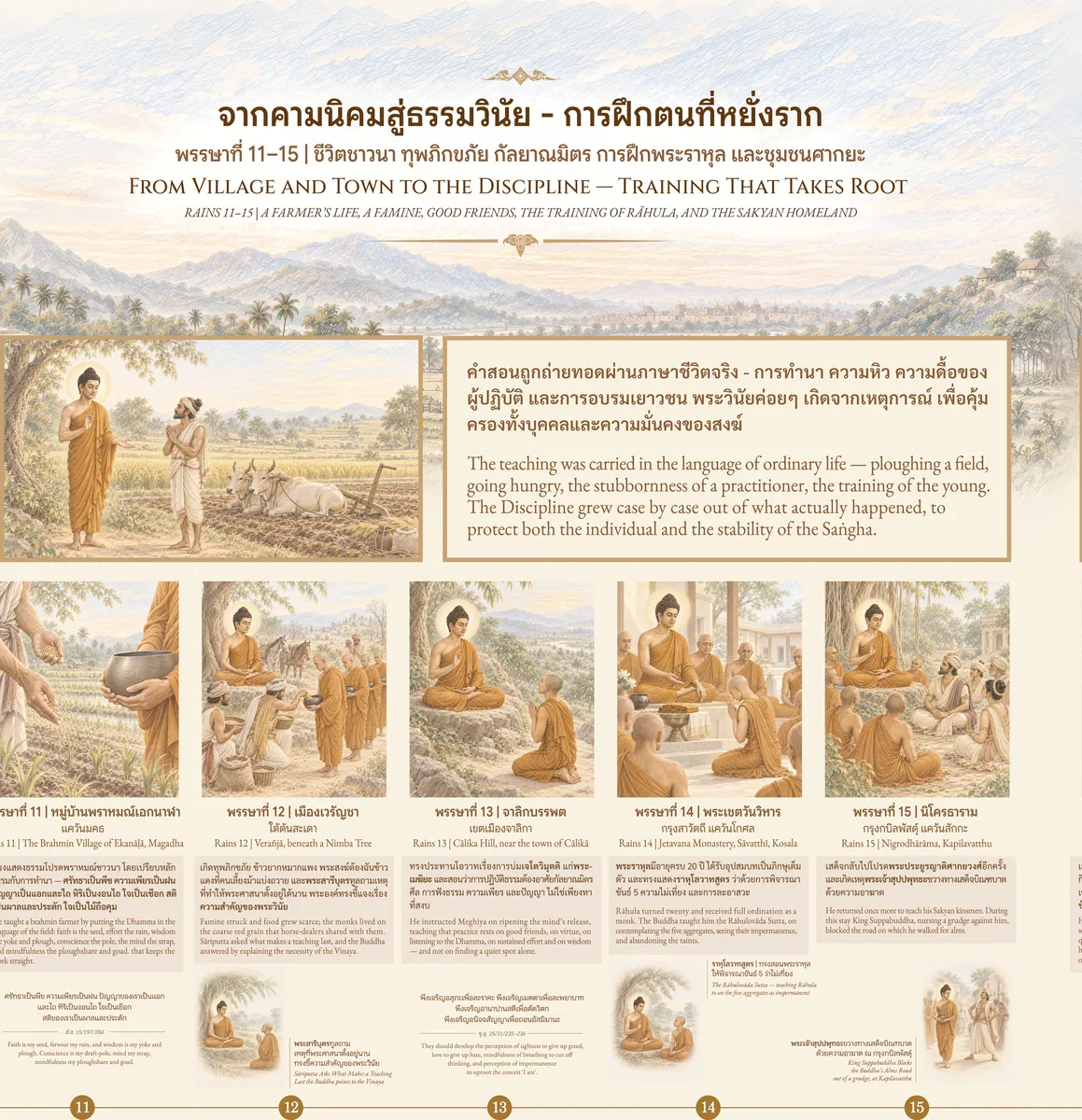
คำสอนถูกถ่ายทอดผ่านภาษาชีวิตจริง - การทำนา ความหิว ความดื้อของผู้ปฏิบัติ และการอบรมเยาวชน พระวินัยค่อยๆ เกิดจากเหตุการณ์ เพื่อคุ้มครองทั้งบุคคลและความมั่นคงของสงฆ์
The teaching was carried in the language of ordinary life — ploughing a field, going hungry, the stubbornness of a practitioner, the training of the young. The Discipline grew case by case out of what actually happened, to protect both the individual and the stability of the Saṅgha.
ธรรมถูกอธิบายด้วยภาษาชีวิตประจำวัน เช่น การทำนา ความหิว และมิตรภาพ
The Dhamma was explained in everyday terms — farming, hunger and friendship
พระวินัยเกิดจากเหตุการณ์จริง เพื่อป้องกันความเสื่อมและคุ้มครองชุมชนสงฆ์
The Vinaya arose from real incidents, to prevent decline and protect the community
การอบรมพระราหุลและพระเมฆิยะชี้ว่าการฝึกตนต้องมีความซื่อตรงและกัลยาณมิตร
The training of Rāhula and of Meghiya shows that practice requires honesty and good friends

วีดิทัศน์และเสียงบรรยายของช่วงนี้อยู่ที่หน้าปกเสียงบรรยายช่วงนี้ยาว 3:51 นาที · ในวีดิทัศน์เริ่มนาทีที่ 11:11Narration 3:51 min · begins at 11:11 in the video · ไปที่หน้าปก

พรรษาที่ 11 · Rains 11
แคว้นมคธ
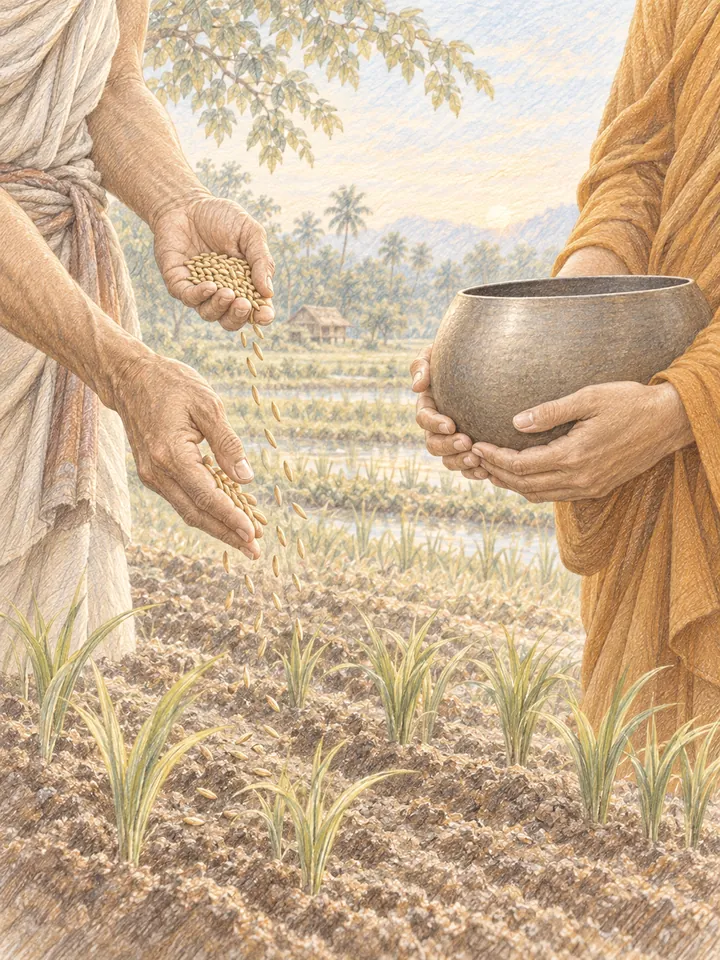
ทรงแสดงธรรมโปรดพราหมณ์ชาวนา โดยเปรียบหลักธรรมกับการทำนา — ศรัทธาเป็นพืช ความเพียรเป็นฝน ปัญญาเป็นแอกและไถ หิริเป็นงอนไถ ใจเป็นเชือก สติเป็นผาลและประตัก
He taught a brahmin farmer by putting the Dhamma in the language of the field: faith is the seed, effort the rain, wisdom the yoke and plough, conscience the pole, the mind the strap, and mindfulness the ploughshare and goad.
พุทธพจน์ · กสิสูตร
ศรัทธาเป็นพืช ความเพียรเป็นฝน ปัญญาของเราเป็นแอกและไถ หิริเป็นงอนไถ ใจเป็นเชือก สติของเราเป็นผาลและประตัก
Faith is my seed, fervour my rain, and wisdom is my yoke and plough. Conscience is my draft-pole, mind my strap, mindfulness my ploughshare and goad.
สํ.ส. (ไทย) 15/197/284 · SN 7.11 (Sujato)ระดับหลักฐาน B/C

พรรษาที่ 12 · Rains 12
ใต้ต้นสะเดา
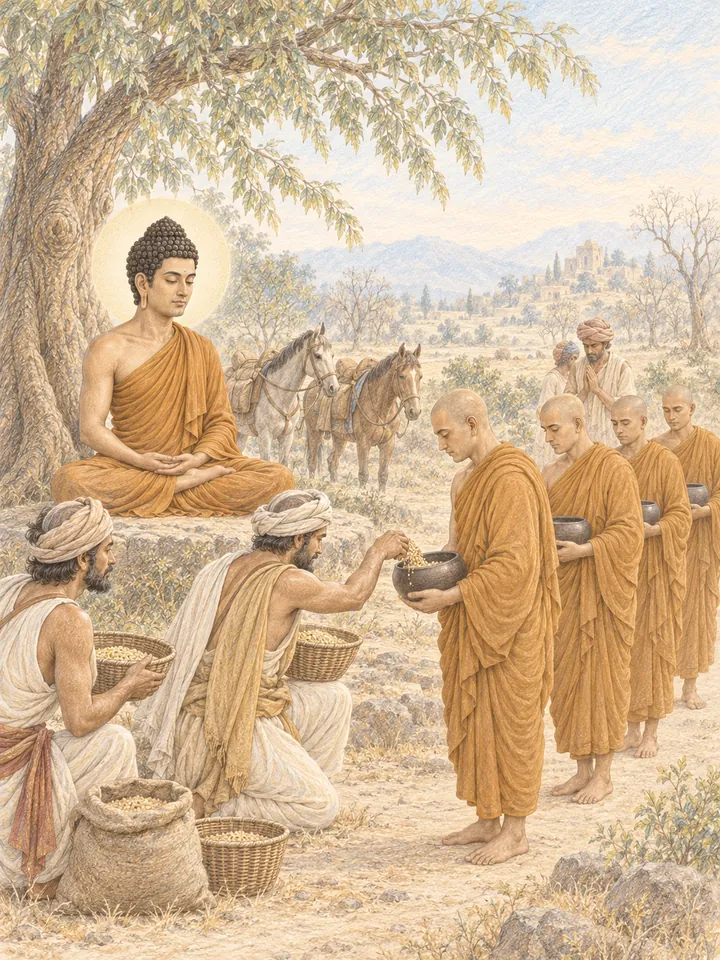
เกิดทุพภิกขภัย ข้าวยากหมากแพง พระสงฆ์ต้องฉันข้าวแดงที่คนเลี้ยงม้าแบ่งถวาย และพระสารีบุตรทูลถามเหตุที่ทำให้พระศาสนาตั้งอยู่ได้นาน พระองค์ทรงชี้แจงเรื่องความสำคัญของพระวินัย
Famine struck and food grew scarce; the monks lived on the coarse red grain that horse-dealers shared with them. Sāriputta asked what makes a teaching last, and the Buddha answered by explaining the necessity of the Vinaya.
ระดับหลักฐาน B/C

พรรษาที่ 13 · Rains 13
เขตเมืองจาลิกา
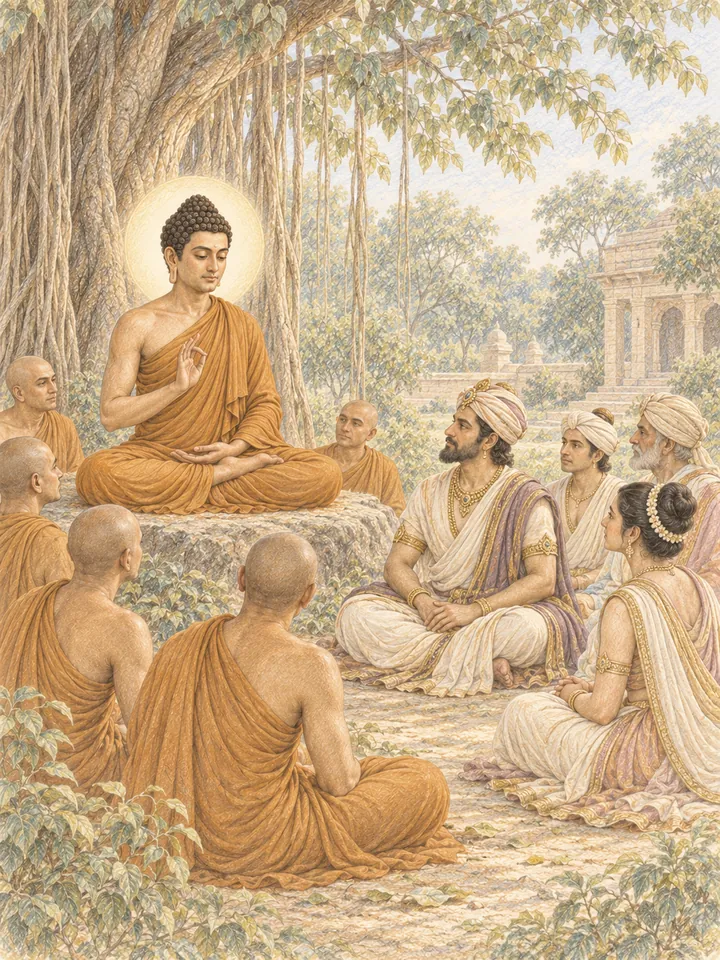
ทรงประทานโอวาทเรื่องการบ่มเจโตวิมุตติ แก่พระเมฆิยะ และสอนว่าการปฏิบัติธรรมต้องอาศัยกัลยาณมิตร ศีล การฟังธรรม ความเพียร และปัญญา ไม่ใช่เพียงหาที่สงบ
He instructed Meghiya on ripening the mind’s release, teaching that practice rests on good friends, on virtue, on listening to the Dhamma, on sustained effort and on wisdom — and not on finding a quiet spot alone.
พุทธพจน์ · เมฆิยสูตร
พึงเจริญอสุภะเพื่อละราคะ พึงเจริญเมตตาเพื่อละพยาบาท พึงเจริญอานาปานสติเพื่อตัดวิตก พึงเจริญอนิจจสัญญาเพื่อถอนอัสมิมานะ
They should develop the perception of ugliness to give up greed, love to give up hate, mindfulness of breathing to cut off thinking, and perception of impermanence to uproot the conceit 'I am'.
ขุ.อุ. (ไทย) 25/31/235–236 · Ud 4.1 (Sujato)ระดับหลักฐาน B/C

พรรษาที่ 14 · Rains 14
กรุงสาวัตถี แคว้นโกศล
พระราหุลมีอายุครบ 20 ปี ได้รับอุปสมบทเป็นภิกษุเต็มตัว และทรงแสดงราหุโลวาทสูตร ว่าด้วยการพิจารณาขันธ์ 5 ความไม่เที่ยง และการละอาสวะ
Rāhula turned twenty and received full ordination as a monk. The Buddha taught him the Rāhulovāda Sutta, on contemplating the five aggregates, seeing their impermanence, and abandoning the taints.
ระดับหลักฐาน B/C

พรรษาที่ 15 · Rains 15
กรุงกบิลพัสดุ์ แคว้นสักกะ
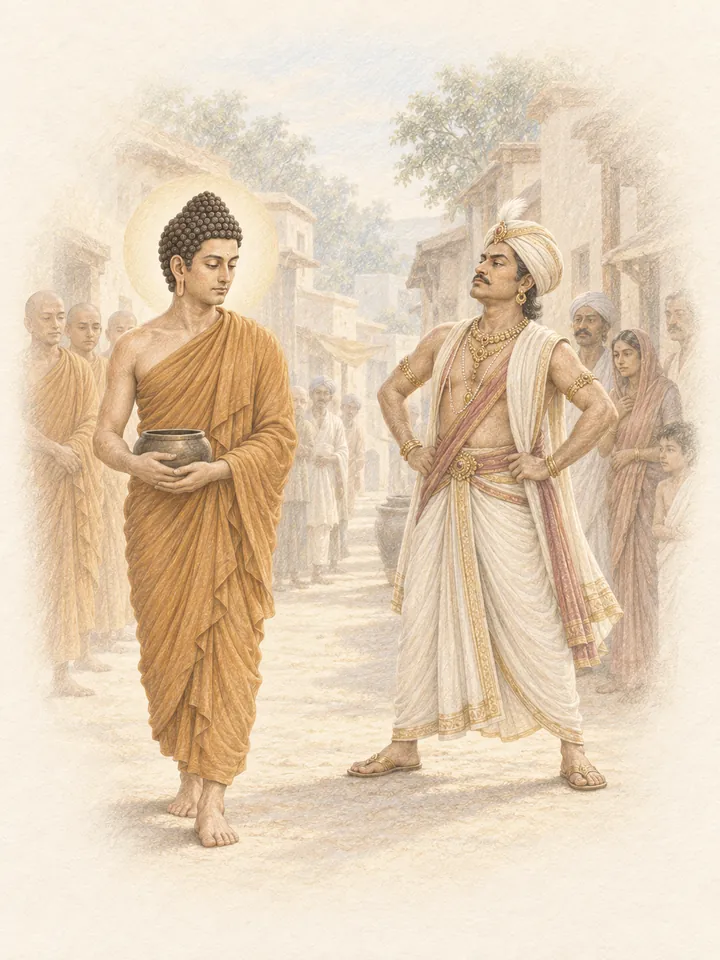
เสด็จกลับไปโปรดพระประยูรญาติศากยวงศ์อีกครั้ง และเกิดเหตุพระเจ้าสุปปพุทธะขวางทางเสด็จบิณฑบาตด้วยความอาฆาต
He returned once more to teach his Sakyan kinsmen. During this stay King Suppabuddha, nursing a grudge against him, blocked the road on which he walked for alms.
ระดับหลักฐาน B/C
ตัวเลขคือพรรษาที่เกี่ยวข้อง

ทรงชี้ความสำคัญของพระวินัย
the Buddha points to the Vinaya

ทรงสอนพระราหุลให้พิจารณาขันธ์ 5 ว่าไม่เที่ยง
teaching Rāhula to see the five aggregates as impermanent

ด้วยความอาฆาต ณ กรุงกบิลพัสดุ์
out of a grudge, at Kapilavatthu
ชีวิตชาวนา ทุพภิกขภัย กัลยาณมิตร การฝึกพระราหุล และชุมชนศากยะ
A Farmer’s Life, a Famine, Good Friends, the Training of Rāhula, and the Sakyan Homeland