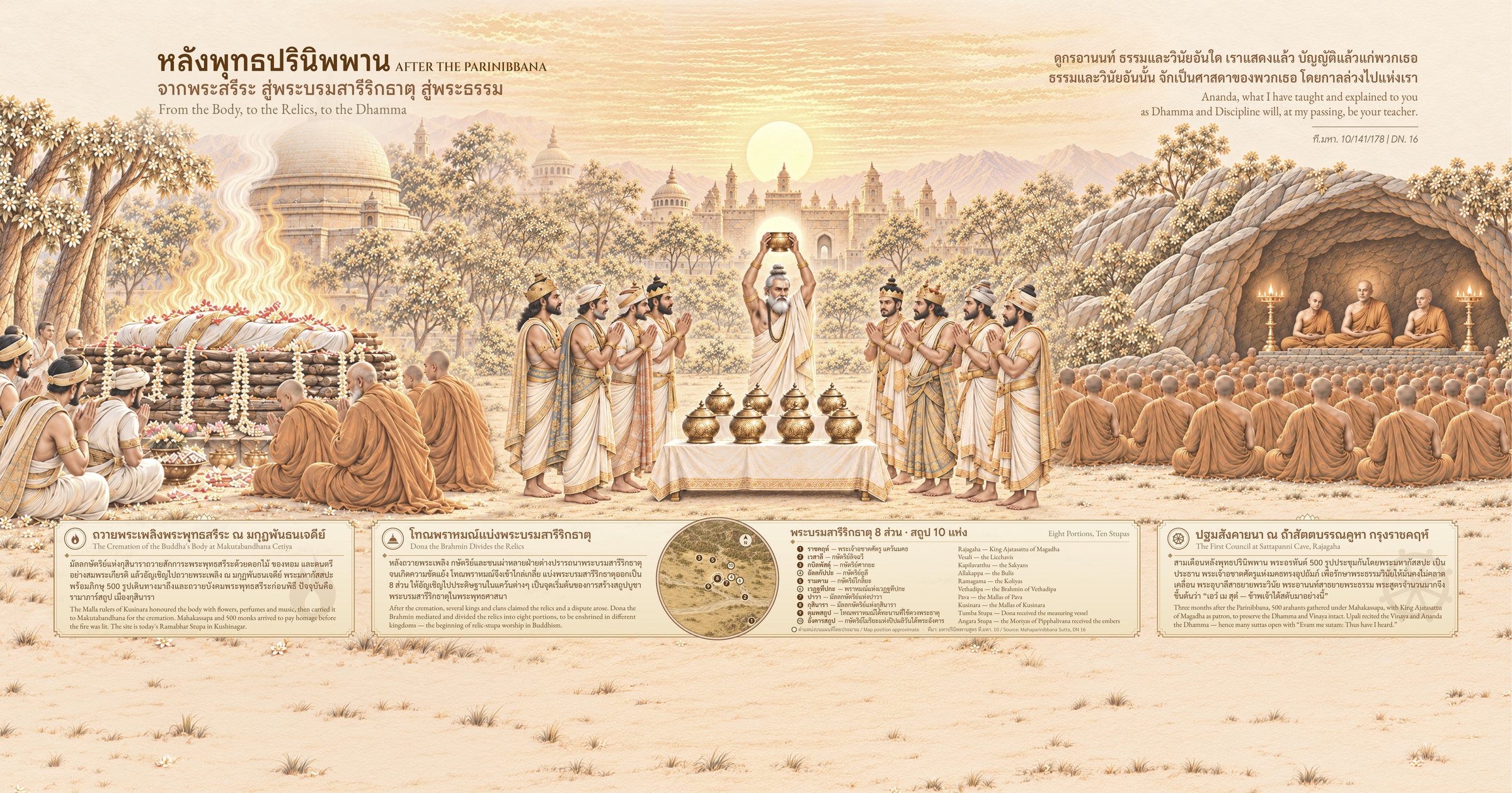
ผนังด้านหลังพระประธาน ตรงข้ามช่องพุทธปรินิพพาน เล่าเหตุการณ์หลังพุทธปรินิพพาน 3 ตอน คือ ถวายพระเพลิงพระพุทธสรีระ การแบ่งพระบรมสารีริกธาตุ และปฐมสังคายนา
The wall behind the principal Buddha image tells three episodes after the Parinibbana: the cremation, the division of the relics, and the First Council.
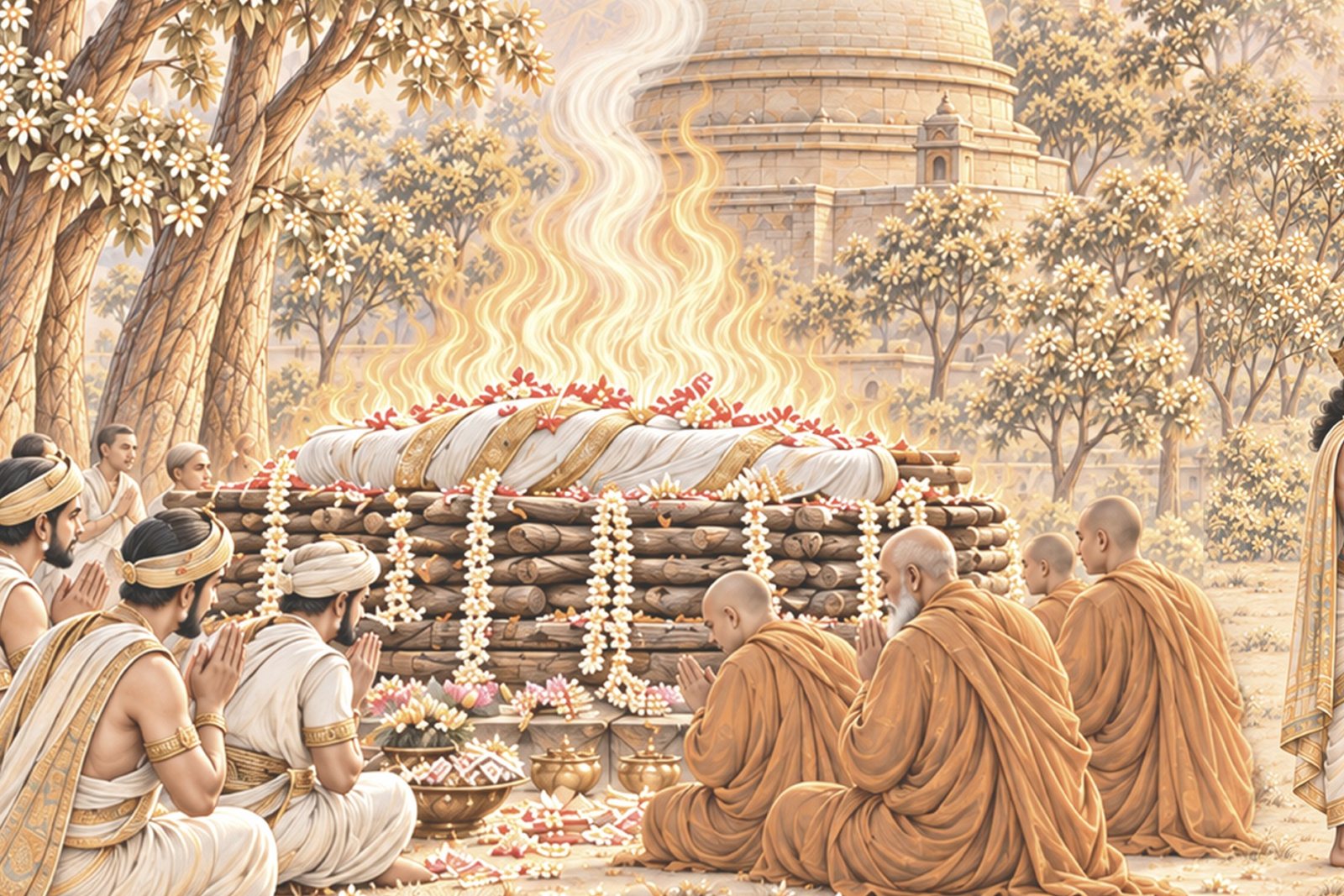
มัลลกษัตริย์แห่งกุสินาราถวายสักการะพระพุทธสรีระด้วยดอกไม้ ของหอม และดนตรีอย่างสมพระเกียรติ แล้วอัญเชิญไปถวายพระเพลิง ณ มกุฏพันธนเจดีย์ พระมหากัสสปะพร้อมภิกษุ 500 รูปเดินทางมาถึงและถวายบังคมพระพุทธสรีระก่อนพิธี ปัจจุบันคือรามาภาร์สถูป เมืองกุสินารา
The Malla rulers of Kusinara honoured the body with flowers, perfumes and music, then carried it to Makutabandhana for the cremation. Mahakassapa and 500 monks arrived to pay homage before the fire was lit. The site is today's Ramabhar Stupa in Kushinagar.
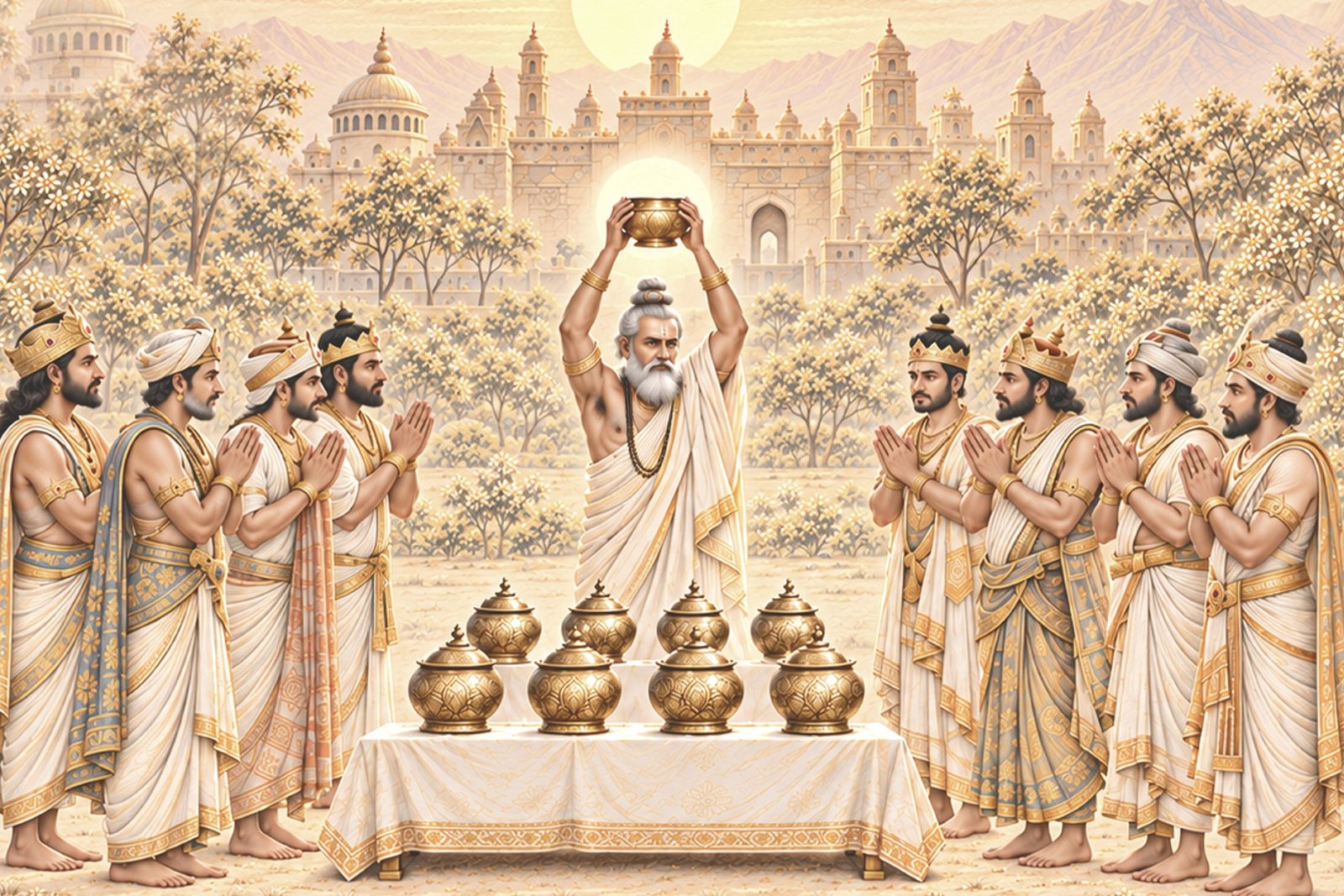
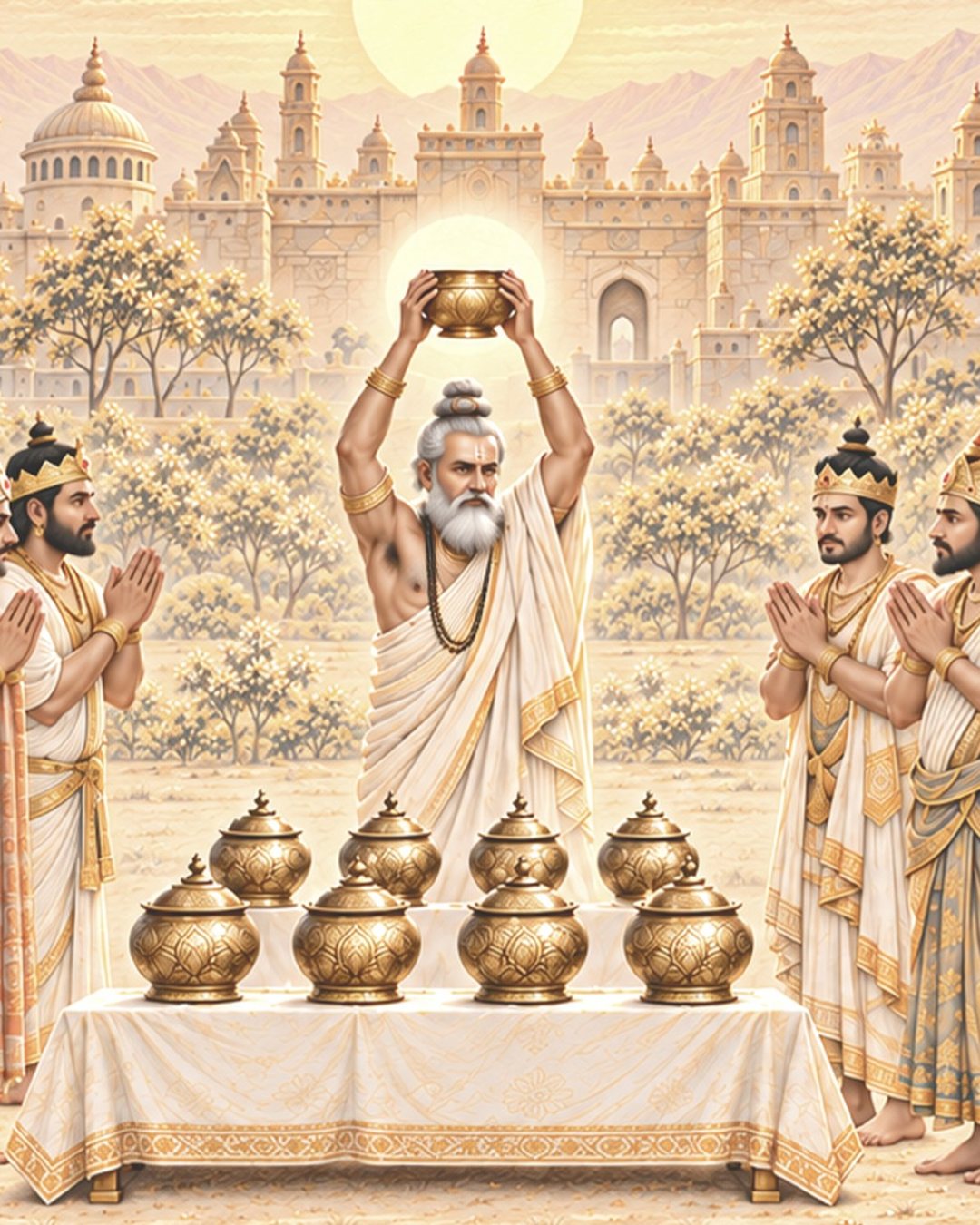
หลังถวายพระเพลิง กษัตริย์และชนเผ่าหลายฝ่ายต่างปรารถนาพระบรมสารีริกธาตุจนเกิดความขัดแย้ง โทณพราหมณ์จึงเข้าไกล่เกลี่ย แบ่งพระบรมสารีริกธาตุออกเป็น 8 ส่วน ให้อัญเชิญไปประดิษฐานในแคว้นต่างๆ เป็นจุดเริ่มต้นของการสร้างสถูปบูชาพระบรมสารีริกธาตุในพระพุทธศาสนา
After the cremation, several kings and clans claimed the relics and a dispute arose. Dona the Brahmin mediated and divided the relics into eight portions, to be enshrined in different kingdoms — the beginning of relic-stupa worship in Buddhism.
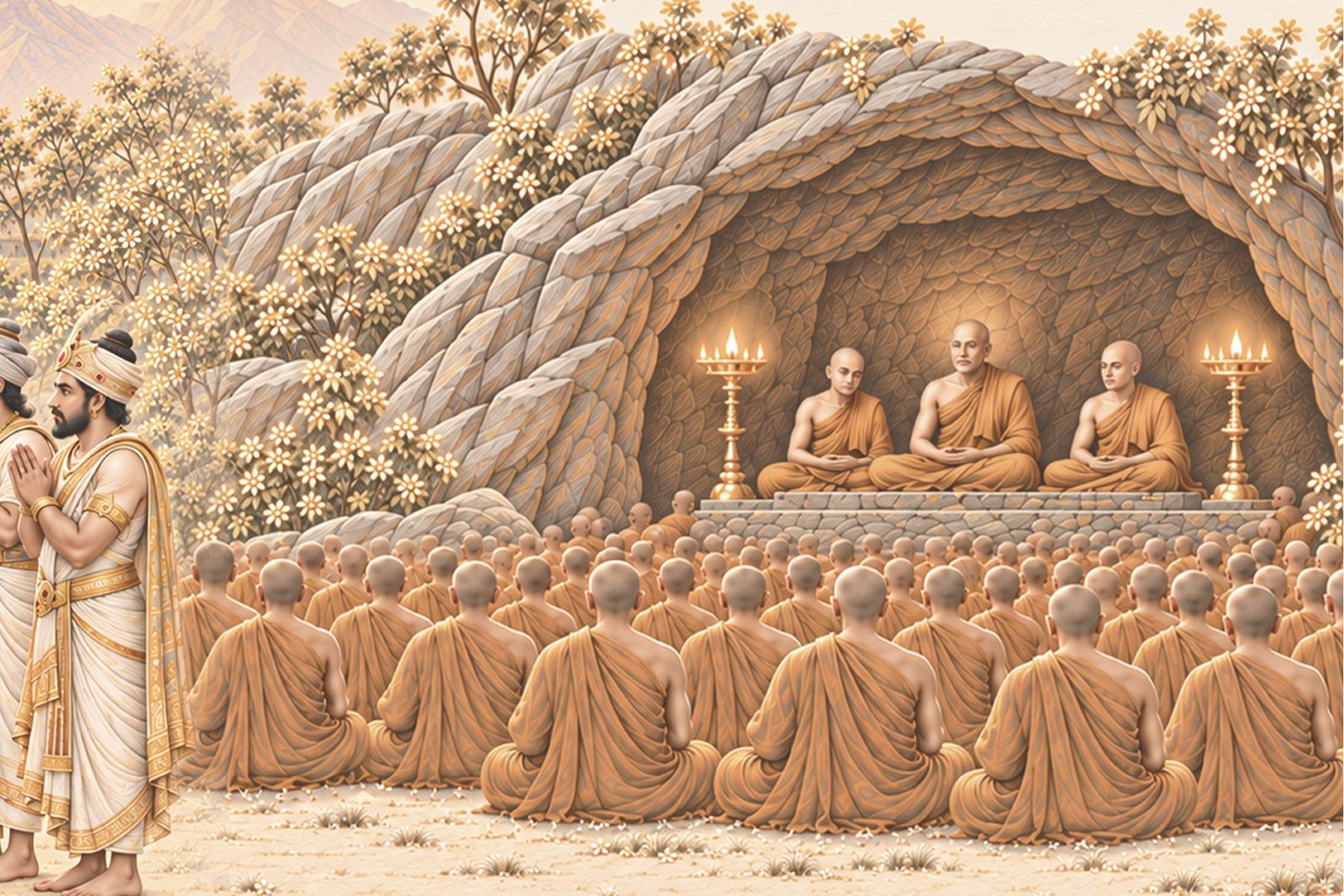
สามเดือนหลังพุทธปรินิพพาน พระอรหันต์ 500 รูปประชุมกันโดยพระมหากัสสปะเป็นประธาน พระเจ้าอชาตศัตรูแห่งมคธทรงอุปถัมภ์ เพื่อรักษาพระธรรมวินัยให้มั่นคงไม่คลาดเคลื่อน พระอุบาลีสาธยายพระวินัย พระอานนท์สาธยายพระธรรม พระสูตรจำนวนมากจึงขึ้นต้นว่า "เอวํ เม สุตํ — ข้าพเจ้าได้สดับมาอย่างนี้"
Three months after the Parinibbana, 500 arahants gathered under Mahakassapa, with King Ajatasattu of Magadha as patron, to preserve the Dhamma and Vinaya intact. Upali recited the Vinaya and Ananda the Dhamma — hence many suttas open with "Evam me sutam: Thus have I heard."
| # | สถานที่ — ผู้รับ Place — recipient |
|---|---|
| 1 | ราชคฤห์ — พระเจ้าอชาตศัตรู แคว้นมคธ Rajagaha — King Ajatasattu of Magadha |
| 2 | เวสาลี — กษัตริย์ลิจฉวี Vesali — the Licchavis |
| 3 | กบิลพัสดุ์ — กษัตริย์ศากยะ Kapilavatthu — the Sakyans |
| 4 ○ | อัลลกัปปะ — กษัตริย์ถูลี Allakappa — the Bulis |
| 5 | รามคาม — กษัตริย์โกลิยะ Ramagama — the Koliyas |
| 6 ○ | เวฏฐทีปกะ — พราหมณ์แห่งเวฏฐทีปกะ Vethadipa — the Brahmin of Vethadipa |
| 7 | ปาวา — มัลลกษัตริย์แห่งปาวา Pava — the Mallas of Pava |
| 8 | กุสินารา — มัลลกษัตริย์แห่งกุสินารา Kusinara — the Mallas of Kusinara |
| 9 | ตุมพสถูป — โทณพราหมณ์ได้ทะนานที่ใช้ตวงพระธาตุ Tumba Stupa — Dona received the measuring vessel |
| 10 ○ | อังคารสถูป — กษัตริย์โมริยะแห่งปิปผลิวันได้พระอังคาร Angara Stupa — the Moriyas of Pipphalivana received the embers |